21-01 Romanticism – Parisian Life During the Revolution
Romanticism was a sweeping cultural movement that prized emotion, imagination, and the individual over reason, order, and classical authority, arising partly as a reaction against the Enlightenment and the social upheaval of the Revolutionary and Napoleonic wars. Romantic painters explored sublime landscapes, exotic subjects, historical drama, and the darker forces of nature and the human psyche, favouring bold colour and dynamic composition over the measured restraint of Neoclassicism. In France, Théodore Géricault shocked the Salon with The Raft of the Medusa—a monumental scene of contemporary shipwreck—while Eugène Delacroix brought Venetian colour and passionate movement to great historical canvases. In Britain, J.M.W. Turner dissolved solid form into shimmering light and atmospheric abstraction, and John Constable celebrated the familiar English countryside with unprecedented freshness. This chapter explores the Romantic movement through illustrated talks on its major painters, sculptors, and the cultural ideas that shaped one of Western art’s most dramatic transformations.
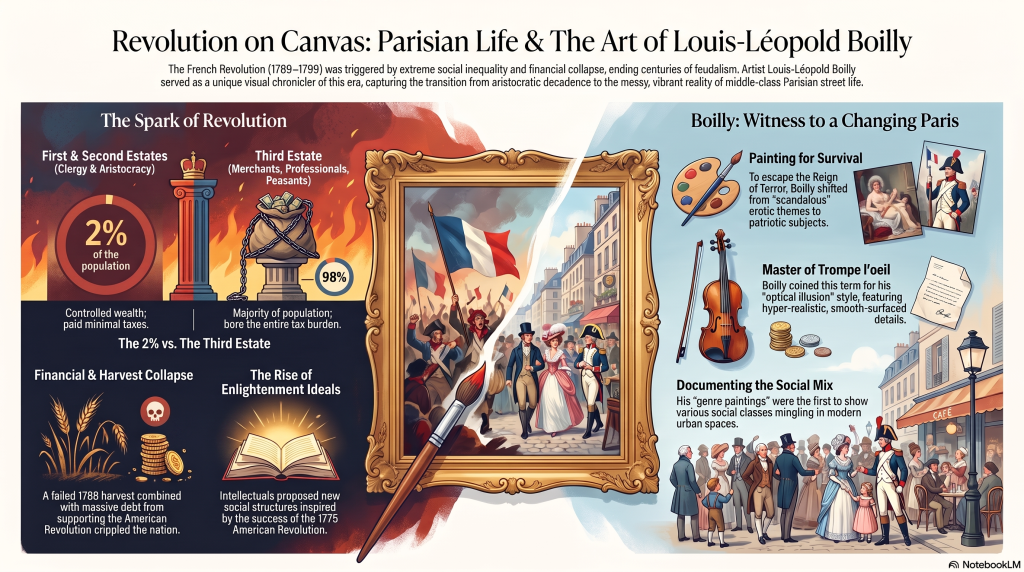
My notes on Louis-Léopold Boilly and Parisian life during the revolution
A conversation about Parisian life during the revolution created by Google Notebook from my notes:
History is frequently taught through the lens of the “history painting”—those monumental, idealized canvases where heroes strike statuesque poses amidst the sulfurous smoke of noble battles. We are conditioned to see the French Revolution through Jacques-Louis David’s grand narratives: Napoleon majestic upon a rearing stallion or the Third Estate taking a solemn, unified oath. Yet, while these myths were being meticulously constructed for posterity, the actual streets of Paris remained a chaotic, vibrant, and often terrifying carnival of ordinary existence.
To see the Revolution as it was truly lived, one must look past the propaganda and toward the prolific, obsessively detailed work of Louis-Léopold Boilly (pronounced ‘BWHY-ee’). A self-taught northern provincial who arrived in Paris in 1787, Boilly achieved a feat perhaps more impressive than his art: he documented the shifting social tides of the Revolution, the Napoleonic Empire, and the Bourbon Restoration with a “porcelain-like” precision, all while keeping his head safely away from the guillotine.
1. The 18th-Century “Snapshot”: 5,000 Portraits and the Democratic Archive
Long before the digital sensor or the social media feed, Boilly treated portraiture with the efficiency of a high-speed military operation. He recognized that the newly emancipated middle class—a bustling cross-section of lawyers, actors, and merchants—craved a way to document their existence in a world where social hierarchies were dissolving.
Boilly’s “democratic archive” was not merely about art; it was a service industry. Producing roughly 5,000 small-scale portraits (precisely 22 x 17 cm) over his career, he perfected a two-hour turnaround for a head-and-shoulders study. By providing visibility to classes previously ignored by the “high art” of the Ancien Régime, he created a precursor to the modern profile picture—a way to prove one’s status and survival amidst a literal social storm.
Boilly described the production of these portraits as almost a military operation and he joked they were his “service record in painting.”
These were more than just likenesses; they were proof of life. In a city where a change in regime could render one invisible or dead overnight, Boilly’s portraits anchored the individual in the “now.”
2. The Propaganda Gap: Symbolic Truth vs. Literal Reality
The tension between revolutionary myth-making and the “unvarnished” reality is best captured in the figure of Napoleon Bonaparte. In the popular imagination, David’s Napoleon Crossing the Alps (1801) defines the era: the General is a force of nature, calm upon a white horse in a mountain tempest. The reality was far more mundane: Napoleon crossed the Great St. Bernard Pass in fine weather, several days behind his troops, seated unceremoniously on a mule.
This discrepancy highlights a pivotal shift from Neoclassical “reason” to Romantic “character.” When David argued for the necessity of a sitting to capture a true resemblance, Napoleon famously dismissed the value of literal exactness in favor of the “genius” of the subject:
“A resemblance? It isn’t the exactness of the features, a wart on the nose which gives the resemblance. It is the character that dictates what must be painted… Nobody knows if the portraits of the great men resemble them, it is enough that their genius lives there.”
This transition marked the birth of the Romantic idea that the artist’s duty was to capture an internal essence rather than an external truth.
3. The Bastille’s Great Secret and the “Great Fear”
The Revolution’s most potent symbol—the storming of the Bastille on July 14, 1789—likewise suffers from a gap between its monumental reputation and its literal contents. Though it stood as the ultimate architectural manifestation of royal tyranny, at the moment it was seized, the fortress held a mere seven inmates.
The fall of the Bastille was less a calculated military strike and more the explosive byproduct of a “Great Fear”—a specific phenomenon of rural, panic-stricken peasants reacting to a perfect storm of economic and social pressures that had been building for decades.
Fact Check: What Caused the Revolution?
- Population Pressures: France had become the most populous nation in Europe; longer lifespans stretched resources to a breaking point.
- Harvest Failure: The total failure of the 1788 harvest placed an unbearable financial burden on the poor, leading to widespread starvation.
- The American Connection: France was functionally bankrupt due to the massive financial and military aid provided to the Americans during their Revolution (1775–1783).
4. Painting for Survival: From “Obscenity” to Trompe l’oeil
In the early 1790s, Boilly was the master of the “genre painting”—intimate scenes of everyday life that frequently flirted with the erotic. Works such as Two Young Women Kissing or Comparing Little Feet (where women exposed their legs and décolletage to the viewer’s voyeuristic gaze) were immensely popular but politically hazardous. In 1794, at the height of the Reign of Terror, the Committee of Public Safety accused him of producing “revolting obscenity” that “dirtied the walls of the republic.”
Boilly’s response was a masterpiece of survivalist pivot. He quickly produced The Triumph of Marat, a patriotic multi-person composition celebrating the radical leader’s acquittal. While Boilly’s son claimed in 1828 that the work “was undertaken out of terror, not inclination,” modern art historians suggest it was a more calculated, sophisticated response to the political climate.
During this period of intense scrutiny, Boilly also leaned into his technical virtuosity. It was Boilly who actually coined the term “trompe l’oeil” (deceive the eye), using it as the title for a work at the Salon of 1800. By mastering the art of “invisible” brushstrokes and illusion, Boilly made his craftsmanship his primary defense.
5. Breaking the Hierarchy: The Painter of Modern Life
Before the Revolution, the art world adhered to a strict “stylistic hierarchy” that placed history painting at the summit and genre painting at the base. Boilly shattered this with his 1798 work, The Meeting of Artists in Isabey’s Studio.
Depicting 31 contemporary creatives in a grand format usually reserved for kings, Boilly used the techniques of 17th-century Dutch masters like Dou and Van Mieris to achieve a “porcelain-like” finish that captivated the public. He was also a brilliant marketer: to capitalize on the sensation, he placed his small 120-franc portraits around the main canvas, essentially transforming a Salon masterpiece into a shop window that listed his address and his prices.
By documenting everything from high-ranking bankers to street urchins and flower sellers, Boilly became the “painter of modern life” before the term was even invented, recording a post-feudal world where the classes were finally, and chaotically, thrown together.
The Carnival of Life
As the rigid “reason” of the Neoclassical era dissolved into the “subjective emotion” of Romanticism, Boilly’s observant eye remained consistent. In 1832, at the age of 71, he painted A Carnival Scene, a sprawling panorama of over 70 figures.
It is a masterpiece of “unflinching detail” and sharp humor. Amidst the Pierrots and Harlequins, Boilly includes a man dressed as a woman climbing into a coach, her skirts billowing up to reveal bare buttocks positioned precariously over the point of a soldier’s bayonet. It is the perfect metaphor for a man who navigated multiple bloody regime changes by observing the “carnival” of humanity without blinking.
If an artist today were to document our own social storms with Boilly’s technical rigor and documentary eye, what would they see in our “carnival”? Would they find the “genius” Napoleon spoke of, or would they focus, as Boilly did, on the pickpockets, the pretenders, and the everyday people just trying to survive the storm?Gemini Notebook can be inaccurate; please double-check its responses.
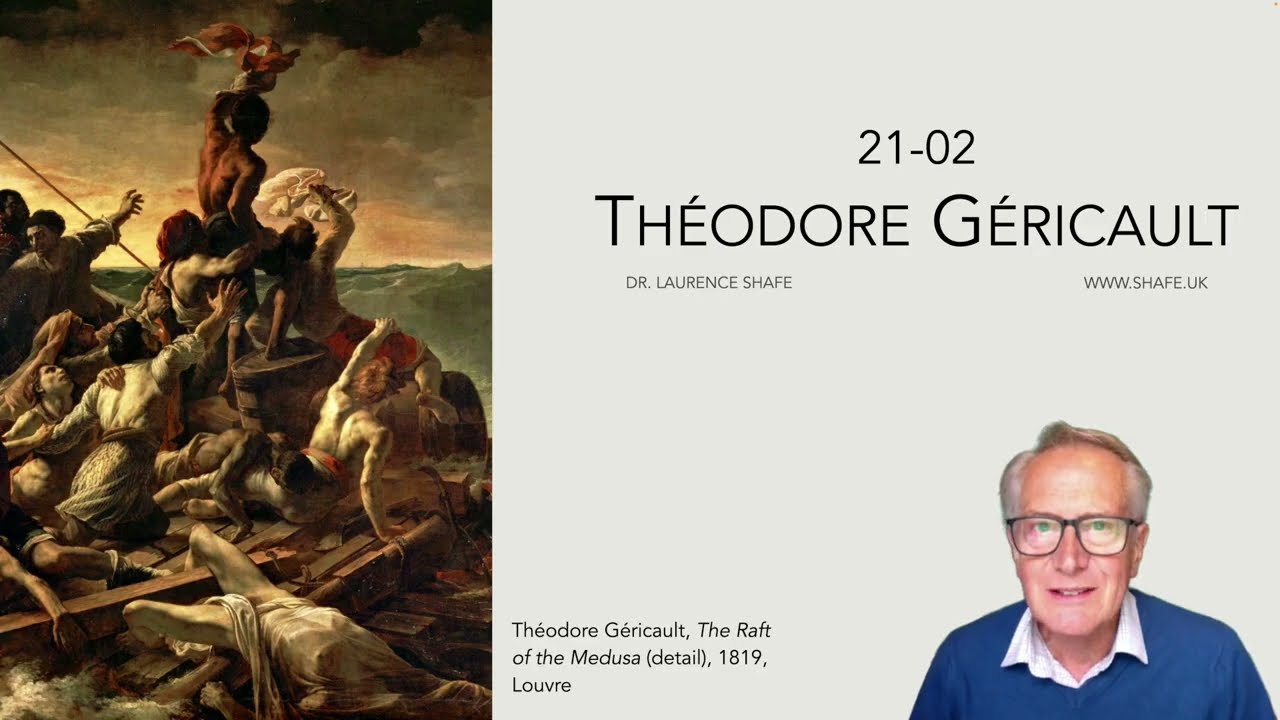
21-02 Romanticism – Théodore Géricault

This talk provides a comprehensive biographical and artistic examination of Théodore Géricault, a foundational figure of the French Romantic movement. The sources detail how Géricault broke away from Neoclassical traditions by emphasizing raw emotion, the power of nature, and the psychological depth of the human experience. Significant focus is placed on his masterpiece, The Raft of the Medusa, which transformed a contemporary tragedy into a controversial political statement. The narrative also explores his technical fascination with equestrian subjects and his groundbreaking series of portraits of the insane, which treated mental illness with unprecedented dignity and realism. Ultimately, the materials document his short but intense life, characterized by personal scandal, financial instability, and a relentless pursuit of creative independence. His legacy is presented as a bridge to modern art, influencing successors like Delacroix through his focus on individual suffering and social outcasts.
My Notes on Théodore Géricault
A discussion on Romanticism 1790-1850 (created by NotebookLM from my notes):
Introduction: The Man Behind the Masterpiece
Most people know Théodore Géricault for one thing: his monumental, terrifying masterpiece, The Raft of the Medusa. The painting is an icon of French Romanticism, a sprawling canvas of desperation, hope, and horror that has captivated audiences for two centuries. But the man who created it is often lost in its shadow, a figure whose self-portraits reveal a stormy mind wrestling with ambition, romance, and doubt.
Géricault’s career was tragically short, lasting just fifteen years before his death at age 33. Yet in that brief time, he blazed a trail filled with personal scandal, fierce political rebellion, and a radical empathy that feels surprisingly modern. He was more than a painter of historical events; he was a cultural critic who used his art to confront the darkest corners of society and the human psyche. This article uncovers five surprising truths about the life and work of an artist who lived and painted with a reckless, unforgettable humanity.
Takeaway 1: A Secret Affair with His Aunt Caused Lifelong Turmoil
Behind Géricault’s brooding artistic intensity lay a deep and disastrous personal secret. He engaged in a passionate affair with Alexandrine-Modeste Caruel de Saint-Martin, the young wife of his own uncle. She was 28 years younger than her husband and eight years older than Géricault, a dynamic that made the transgression all the more scandalous. In a cruel twist of fate, this was the same uncle who had championed Géricault’s artistic ambitions against his father’s wishes, providing crucial early support.
The affair culminated in August 1818 with the birth of an illegitimate son, Georges-Hippolyte, a scandal the family desperately concealed. The consequences for Géricault were catastrophic. His uncle, upon discovering the truth, withdrew all financial and emotional support. The artist reportedly never saw Alexandrine or his son again. This profound emotional turmoil is believed to have contributed to a period of deep sadness and potential mental health struggles. The brooding intensity so palpable in his self-portraits is not just an artistic pose; it is the authentic expression of a man haunted by personal drama and loss.
Takeaway 2: His Most Famous Painting Was a Scathing Political Takedown
The Raft of the Medusa is not merely a dramatic depiction of a shipwreck; it was a bombshell of political protest aimed squarely at the newly restored French monarchy. The painting is based on a recent and scandalous event: the 1816 wreck of the French naval frigate Méduse. The ship’s captain was a political appointee who had been given the position due to his connections with the Bourbon regime, despite not having sailed for two decades.
His incompetence led directly to the ship running aground. When the lifeboats proved insufficient, the captain and his senior officers abandoned 147 crew members on a hastily constructed raft. For thirteen days, the survivors endured starvation, dehydration, and eventually, cannibalism. Only 15 lived to be rescued. In a stroke of narrative genius, Géricault chose to depict the bleakest moment of the ordeal: when the survivors first spotted the ship that would eventually rescue them, only to watch it sail away into the distance. By focusing on this moment of false hope and the suffering of ordinary people—not classical heroes—Géricault created a powerful indictment of a corrupt and incompetent regime.
Takeaway 3: He Documented London’s Underbelly Like a Gritty Social Journalist
During his visits to London in the early 1820s, Géricault turned his artistic gaze away from grand historical themes and toward the raw realities of modern urban life. In a series of lithographs known as the “English Series,” he acted as a social journalist, focusing his lens on the working class and people living in destitution rather than on London’s famous landmarks or upper-class society.
His works from this period are not sentimental or romanticized; they are stark, matter-of-fact reports on the poverty and inequality he witnessed. Géricault was fascinated by the city’s darker side, and a surviving watercolor proves he was actively documenting it. The drawing, titled Le Supplice (The Torment), captures the last minutes of the Cato Street conspirators, who were publicly hanged in 1820 for plotting to assassinate the entire British cabinet. This period reveals a different facet of the artist: one deeply concerned with social realism and committed to documenting the unvarnished truths of his time.
Takeaway 4: He Painted Portraits of the Mentally Ill with Unprecedented Empathy
Perhaps the most radical work of Géricault’s career was a series of ten portraits he painted between 1821 and 1823 for a physician acquaintance, Dr. Étienne-Jean Georget. The commission was to document patients in a Parisian asylum, each diagnosed with a specific form of “monomania”—a popular 19th-century term for an obsessive fixation. Here, Géricault abandons the Romanticism of his earlier work for a stark, almost clinical realism that serves a profoundly humanistic purpose.
Géricault’s connection to the subject was personal; he had suffered his own nervous breakdown after completing The Raft of the Medusa and had a family history of mental illness. This insight fueled a revolutionary approach.
…his approach was radical: instead of portraying his subjects as deranged or monstrous, as had been typical in art, he depicted them with intense realism, focusing on their humanity and the pathos of their inner torment.
These paintings were not intended for public exhibition but as teaching tools to humanize patients for medical students. They were a groundbreaking project at the intersection of art and science. To this day, the series remains shrouded in mystery, as only five of the original ten portraits are known to have survived: A Woman Addicted to Gambling, A Man Suffering from Delusions of Military Command, A Woman Suffering from Obsessive Envy, A Child Snatcher, and Portrait of a Kleptomaniac.
Takeaway 5: He Bet on Himself and His Art Until the Very End
Géricault was fiercely independent, an artist who refused to compromise his vision. He famously clashed with his tutor, the celebrated painter Carle Vernet, over how to depict horses, retorting, “One of my horses would have devoured six of yours!” This stubborn confidence defined his career; he preferred to “shock the juries of the Paris Salon than to earn their approval.” He often worked on a massive scale without a commission, as he did for The Raft of the Medusa, investing his own time and money in the subjects that moved him.
Even in his final days, dying at 33 from a tubercular infection of the spine, his ambition was undiminished, and he was still planning several vast new paintings. His estate was officially left to his father, but a final act of care came from the family he had once torn apart. His father ensured the property was passed on to the person who needed it most: Géricault’s illegitimate son, Georges-Hippolyte, who was then just five years old.
Conclusion: A Legacy of Reckless Humanity
Théodore Géricault was far more than the tragic, tormented Romantic figure of legend. He was a pioneer who wielded his brush like a weapon, using his art to expose injustice, document social reality, and foster a radical sense of empathy for the forgotten and the suffering. His legacy is one of reckless passion, both in his life and on his canvases, capturing a stormy mind determined to show the world its unvarnished face.
It makes you wonder: in an age of endless images, what is the true role of an artist today?
21-03 Romanticism – Eugène Delacroix

Eugène Delacroix is presented as the definitive leader of the French Romantic movement, a visionary who prioritized vibrant colour, movement, and emotional intensity over the rigid constraints of Neoclassicism. These records detail his transformation from a classically trained student into a revolutionary figure whose masterpieces, such as Liberty Leading the People and The Death of Sardanapalus, frequently ignited public controversy. The talk emphasize his pivotal journey to North Africa, an experience that introduced an Orientalist fascination into his work and profoundly shifted his aesthetic toward exotic subjects and naturalistic light. Beyond his large-scale public murals and historical canvases, the sources highlight his deep literary and musical inspirations, including his friendships with figures like Chopin. His legacy is defined by a massive artistic output that fundamentally shaped future generations, directly influencing the techniques of Impressionists like Van Gogh, Renoir, and Cézanne. Delacroix’s life concluded with late official validation, leaving behind a reputation as a pioneer of modern artistic expression and a master of the human condition.

An Audio Talk on Eugene Delacroix by Google NotebookLM:
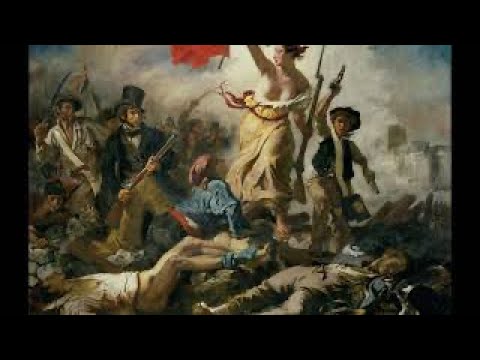
When you picture the art of Eugène Delacroix, one image likely comes to mind: the heroic, bare-breasted figure of Liberty storming a barricade, tricolor flag held high in Liberty Leading the People. It is an enduring symbol of revolution and the passionate spirit of French Romanticism. But who was the man behind this iconic canvas?
While his art burned with emotion, violence, and exoticism, Delacroix’s life was a study in fascinating contradictions. His career was filled with more conflict, controversy, and quiet complexity than his famous art lets on. Here are five surprising facts that reveal the true story of the leader of the French Romantic school.
He Painted the Revolution, But He Didn’t Fight In It
Delacroix created his most famous work, Liberty Leading the People, as a direct and passionate response to witnessing the July Revolution of 1830 in Paris. Yet, despite immortalizing the heroic uprising, he positioned himself not as a combatant on the barricades, but as an observer in the studio. He saw his role as capturing the spirit of the fight, not participating in it directly. In a letter to his brother, he made his position clear:
“My bad mood is vanishing thanks to hard work. I’ve embarked on a modern subject—a barricade. And if I haven’t fought for my country at least I’ll paint for her.”
This choice reveals an artist who believed a single, enduring image could be a more potent and lasting weapon for a nation’s soul than a rifle fired in a fleeting battle. His most powerful contribution to his country would be made not with a weapon in hand, but with a brush.
His Father May Have Been One of France’s Most Powerful Statesmen
Officially, Eugène Delacroix was the son of diplomat Charles-François Delacroix. However, persistent and compelling evidence suggests his biological father was actually one of the most powerful and cunning figures in French politics: Charles Maurice de Talleyrand-Périgord. The adult Eugène bore a strong physical and character resemblance to Talleyrand, and his legal father was believed to have been unable to procreate at the time of Eugène’s conception.
Throughout his career, Delacroix benefited from the quiet protection of Talleyrand, who served in the highest levels of government and assisted the young artist with numerous anonymous commissions. While a hidden connection to the powerful Talleyrand may have smoothed his path, Delacroix’s public career was a minefield of controversy of his own making.
His Most Famous Works Were Considered Scandals
Today, Delacroix’s paintings are revered as masterpieces, but in his own time, they were frequently met with shock and outrage from critics and the public. His raw emotion, chaotic compositions, and expressive brushwork were a radical departure from the restrained, orderly Neoclassical style that dominated the era, and the establishment was not always impressed.
Two of his most significant works were public scandals:
These works were divisive because they refused to idealize their subjects. Instead, they confronted viewers with the brutal, emotional, and often ugly realities of war and passion, a revolutionary act in itself.
He Was the Godfather of the Impressionists
Delacroix’s revolutionary use of color and his dynamic, expressive brushwork did more than just define Romanticism; they laid the groundwork for the next generation of artistic rebels. His techniques profoundly shaped the work of later masters who saw him as a visionary pioneer. The same expressive brushwork and raw emotion that caused critics to call his work “a massacre of art” were the exact qualities that later masters would see as the language of modern painting.
The admiration was deep and universal among these future icons. Pierre-Auguste Renoir once remarked, “In a few generations you can breed a racehorse. The recipe for making a man like Delacroix is less well known.” Paul Cézanne famously declared:
“We all paint in Delacroix’s language.”
Van Gogh also expressed immense admiration for him, going so far as to paint his own version of Delacroix’s “Pietà” in a tribute to the master. Delacroix served as a crucial bridge, connecting the traditions of the Old Masters with the radical experiments that would give birth to Impressionism and, eventually, all of modern art.
His Self-Portrait Defies the “Tormented Artist” Stereotype
The wild energy of paintings like The Death of Sardanapalus might suggest an artist consumed by chaotic passion. Yet, the image Delacroix presented of himself tells a very different story. His 1837 Self-portrait with Green Vest projects not the image of a tormented Romantic, but one of “quiet confidence, self-restraint, and intellect.”
With an alert gaze and a composed expression, Delacroix offers a self-portrait that is both a declaration and a self-examination. He depicts himself not just as a craftsman but as a “thinker and creator,” an intellectual equal to the poets and statesmen of his era. This carefully constructed image challenges the cliché of the wild, emotional Romantic, revealing the deep intellect and self-awareness behind the passionate canvases.
The man behind the myth of Delacroix was a figure of fascinating contradictions: a revolutionary who fought from his studio, a scandalous master who secretly benefited from establishment ties, and a quiet pioneer who paved the way for modern art. He was an intellectual who painted with pure emotion, forever changing the way we see the world.
It makes you wonder: which of today’s controversial artists will be considered the timeless masters of tomorrow?
21-04 Romanticism – The Romantic Age of English Painting
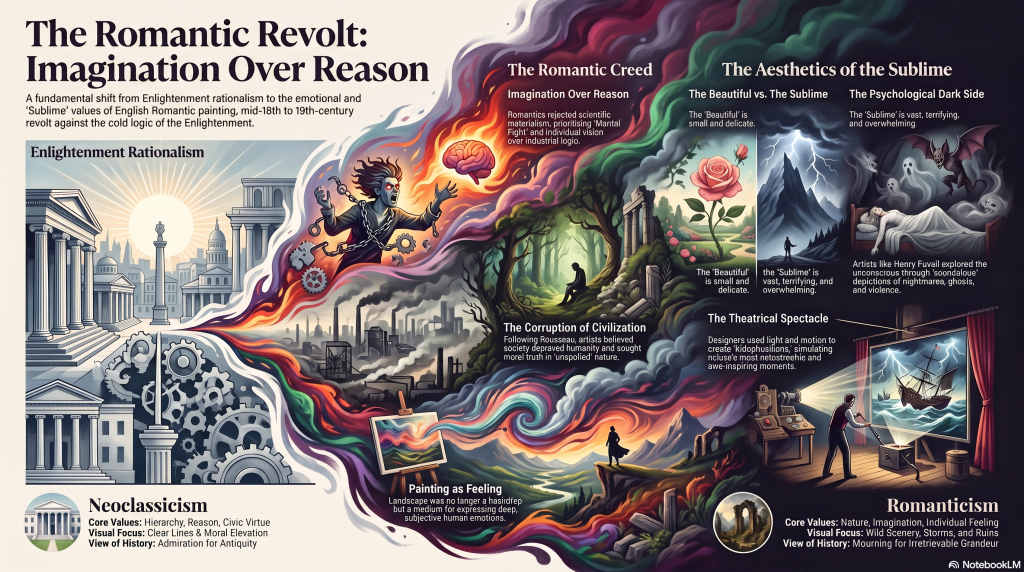
There are so many spelling mistakes in the infographic I suggest you just look at the pictures.
This lecture examines the Romantic Age of English Painting, framing the movement as a powerful revolt against Enlightenment rationalism. The sources explore how artists like William Blake used visionary poetry and art to challenge the “Satanic Mills” of the industrial era, prioritizing imagination and emotion over scientific reason. By contrasting Neoclassicism with the works of Henry Fuseli, the talk illustrates a transition from rigid tradition toward a sublime appreciation for nature and the past. Significant focus is placed on the landscapes of John Constable and J.M.W. Turner, whose focus on naturalism and atmosphere defined the British Romantic spirit. Ultimately, the materials provide a comprehensive look at how individual feeling and a reverence for the wild landscape displaced the civic order of previous generations.
(My YouTube talk will be published on 20 February 2027)
My notes on The Romantic Age of English Painting
An entertaining conversation about The Romantic Age of English Painting created by Google NotebookLM from my notes:
When we think of Romanticism, we often conjure a sanitized, chocolate-box version of history: cozy cottages, dappled sunlight, and picturesque river scenes. We’ve been lulled into a false sense of security by two centuries of greeting cards. In reality, Romanticism was an incendiary revolt—a visceral, often violent psychological uprising against the “Satanic Mills” of industrial reason. It wasn’t about being “pretty”; it was about the fury of the individual soul in a world being mechanized into soullessness.
Here are five surprising truths that reveal the Romantic era as a movement of fire, terror, and radical defiance.
1. Blake’s “Jerusalem” was a Call to Mental Arms
It is a delicious irony of British culture that William Blake’s poem “And did those feet in ancient time” is now a patriotic staple belted out at weddings and rugby matches. In its original context, it was a revolutionary manifesto of “Mental Fight.”
Found in the preface to his epic Milton a Poem (c. 1804–1808), the verses are structured with a deceptive simplicity. Blake asks four rhetorical questions. The first two—asking if Christ walked on England’s green hills—expect a resounding “Yes.” But the second two, asking if Jerusalem was built among “dark Satanic Mills,” expect a “No.”
Blake wasn’t writing a hymn; he was issuing a challenge. To him, the Industrial Revolution was a hellish perversion of the human spirit. He called for ancient, mystical weapons to destroy the factories of the mind and restore a visionary, uncorrupted reality.
I will not cease from Mental Fight, / Nor shall my Sword sleep in my hand: / Till we have built Jerusalem, / In England’s green & pleasant Land.
2. John Constable was the “Rebel” the Critics Loved to Hate
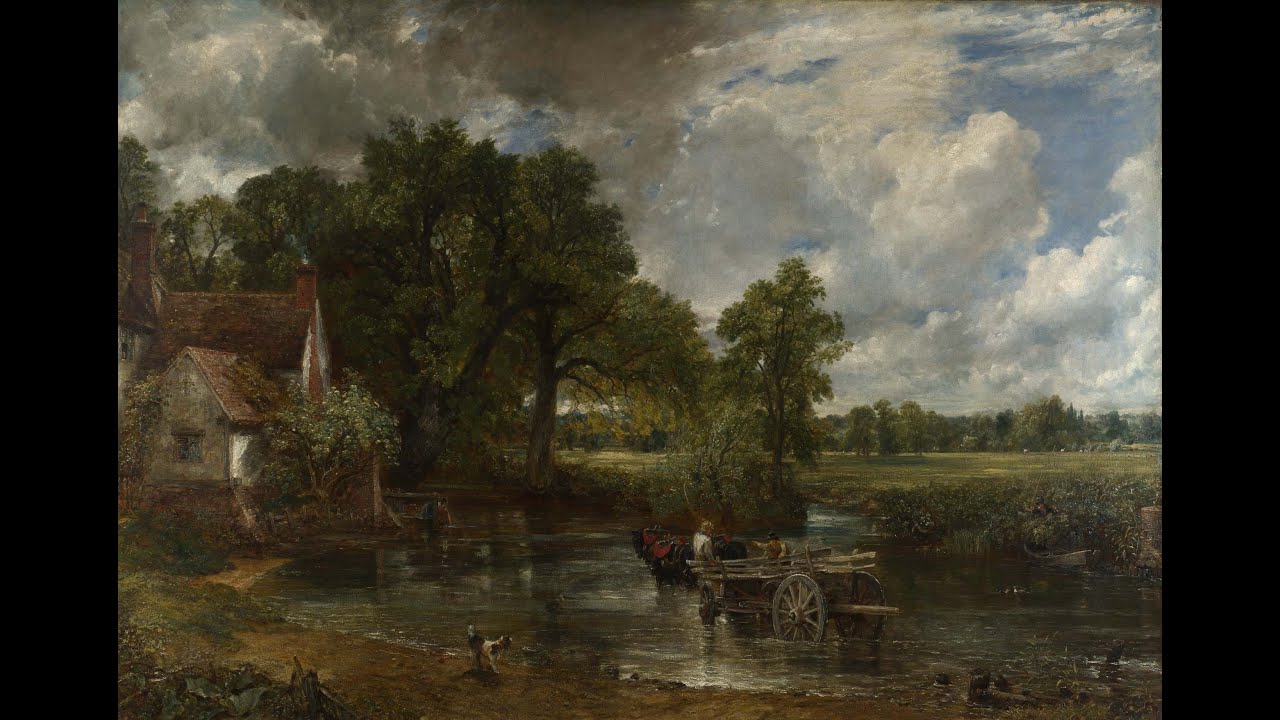
Today, John Constable’s The Hay Wain (1821) is the ultimate symbol of English serenity. Yet, in its time, Constable’s canvas was a battlefield where he waged war against the “mellow brown” tyranny of the artistic establishment.
Critics were appalled by his technique, describing his surfaces as “disfigured” and “execrable.” They mocked his “white flecks” as “chopped hay” and dismissed his work for having “no resemblance to any appearance in Nature.” In a famous act of defiance against his patron, Sir George Beaumont—who insisted a landscape foreground must be the color of an old violin—Constable placed a real violin on the grass to prove that nature was, in fact, green.
The most striking “truth” is the disconnect between the painting’s serenity and the reality of the countryside. While Constable painted a nostalgic golden age, his brother Abram wrote of a Suffolk in the grip of agrarian unrest: “never a night without seeing fires.” England ignored him—he sold only 20 paintings at home in his entire career—but France recognized his genius, awarding him the Gold Medal at the Paris Salon of 1824.
3. The Sublime is Rooted in Terror, Not Beauty
The intellectual heartbeat of the Romantic revolt is the “Sublime,” a concept defined by Edmund Burke in 1757. Burke’s distinction was sharp: the Beautiful is “small, smooth, and delicate” (associated with love), while the Sublime is “vast, infinite, and terrifying” (associated with the fear of death).
While Burke codified the theory, artists like William Hogarth were already there. Hogarth’s Satan, Sin and Death (c. 1735–40) predated Burke’s treatise by decades, using a scene from Milton’s Paradise Lost to visualize a world of dread and transgression.
The Sublime was essentially a “tightening of the nerves.” It was a theological battle between God and Satan played out in the landscape. By choosing the overwhelming awe of a storm or an abyss over the “pretty” order of Neoclassicism, the Romantics were choosing the visceral experience of mortality over the safety of reason.
4. The “Nightmare” was a Commercial Blockbuster
Henry Fuseli’s The Nightmare (1781) remains the most scandalous image of the age. It features a prostrate woman burdened by a leering incubus—a male demon intended to engage in sexual activity with sleepers. The word itself derives from the Old English mære, a suffocating spirit, rather than the horse that peeks through the curtains.
The painting was a commercial masterclass in the public’s appetite for the taboo. While the original painting sold for a modest 20 guineas, the engravings earned the publisher over £500. This proved that there was a mass market for “supernatural subject-matter” and the darker, uninhibited layers of the human psyche.
The work was also intensely autobiographical, fueled by Fuseli’s obsessed, suppressed lust for Anna Landolt. He once wrote to his friend Felix Lavater of a dream involving her:
“Last night I had her in bed with me… tossed my bedclothes hugger-mugger… fused her body and soul together with my own.”
5. Romantics Didn’t Reject the Classics—They Mourned Them
A common misunderstanding is that the Romantics discarded the classical past in favor of wild nature. In reality, they were obsessed with antiquity, but they viewed it through a lens of “awe verging on despair.”
This is perfectly captured in Fuseli’s drawing The Artist Moved by the Grandeur of Antique Fragments. The artist is shown weeping before the remains of the Colossus of Constantine—a 12-meter-high statue of which only fragments (including two right hands) remain.
The Romantics felt that classical grandeur was “irretrievable.” They didn’t see the ruins of Rome as models for civic hierarchy; they saw them as ghosts. They shifted the focus from classical drawing rules to the raw power of feeling. As the poet Percy Bysshe Shelley observed: Ancient greatness “cannot pass away.”
The Legacy of the “Noble Savage”
The Romantic Revolution was anchored in Jean-Jacques Rousseau’s radical claim: “nature made man happy and good, but society depraves him.” This belief in the “noble savage” and the healing power of the wilderness was a direct strike against the corruption of urban refinement.
As we inhabit our own era of technological saturation and digital “Satanic Mills,” we must ask ourselves: is there still room for the fierce imagination and the “Mental Fight” of the Romantics, or have we finally let our sword sleep in our hand?
21-05 Romanticism – William Blake
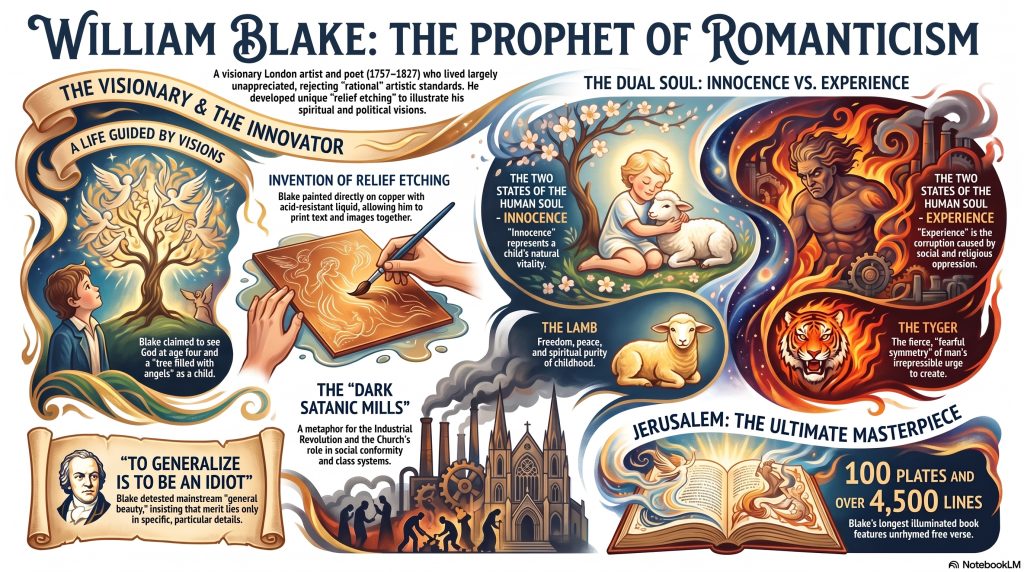
This talk provides a comprehensive biography and artistic analysis of the visionary English poet and engraver William Blake. It outlines his life through a series of chronological stages, beginning with his unconventional childhood and spiritual visions in London, followed by his formal apprenticeship and training at the Royal Academy. The talk highlights his development of relief etching, a technique that allowed him to produce his famous “Illuminated Books” like Songs of Innocence and of Experience. Furthermore, the source explores Blake’s unique mythological system, featuring characters such as Urizen and Los, which he used to critique the social and religious constraints of the Industrial Revolution. The narrative concludes with his later years, focusing on his illustrations of Dante and his posthumous transition from an obscure, impoverished eccentric to a foundational figure of Romanticism. Educational notes and a geographical summary of his London residences anchor his creative output to specific historical and local contexts.
An interesting conversation about William Blake created by Google Notebook from my notes:
Introduction: The Man in the Unmarked Grave
In the history of creative disruption, few stories are as haunting as that of William Blake. In 1827, he died in a squalid, two-room flat off the Strand and was buried in an unmarked common grave in Bunhill Fields—a graveyard for Dissenters. Yet today, this man, once dismissed as a lunatic, stands as a titan of English art and literature.
Blake’s “eccentricity” was his brand from the start. At age four, he claimed to see God’s head in a window; by eight, he saw a tree filled with angels on Peckham Rye. He later sketched the “Ghost of a Flea,” claiming the insect told him that fleas were inhabited by the souls of bloodthirsty men who were limited to tiny bodies to prevent them from depopulating the country. While his contemporaries saw a madman, Blake was building a radical blueprint for the modern creator. To understand Blake is to understand how to maintain spiritual and creative integrity in an age of industrial conformity.
1. The Invention of Modern Childhood
In the 18th century, the prevailing “Miltonic” view of children was grim: they were vessels of original sin, requiring strict discipline and “salvation through faith” to be saved from their inherent nature. Blake shattered this paradigm. He revolutionized the concept of childhood by arguing for its “divine significance,” viewing the child not as a sinner in training, but as a state of inherent “Innocence” free from corruption.
Blake saw the Church and State as predatory forces. He believed these institutions imposed a “loss of vitality” on children, replacing their innate wonder with fear and inhibition.
This wasn’t just sentimentalism; it was a “pessimistic contrary” to the light-hearted children’s verse of his era. While his poem “The Lamb” is often seen as a sweet nursery rhyme, the underlying intensity led later critics and composers like Vaughan Williams to find it unsettling, famously calling it “that horrible little lamb.” For Blake, this innocence was a fragile, sacred state constantly threatened by the “mind-forg’d manacles” of a society designed to crush the human spirit.
2. The Original Indie Publisher
Faced with a high-brow art market that viewed his “extravagant” style with contempt, Blake didn’t wait for permission. He became the ultimate “Direct-to-Consumer” (DTC) pioneer. After his brother Robert appeared to him in a vision following his death, Blake claimed he was taught a new method: “relief etching” or “woodcut on copper.”
This was a major technical pivot. By painting directly onto copper plates with acid-resistant material, he could use “cheap roller presses” rather than the expensive, high-pressure equipment required for traditional engraving. This allowed for a “one-man press” model. Blake controlled the vertical integration of his work: writing, drawing, etching, and manually coloring every page with his wife, Catherine.
This independence was born of gritty necessity. Living in the disease-infested slums of Lambeth, Blake faced “declining fortunes” so severe that Catherine would often place an empty plate on the dinner table to signal they were out of money. By bypassing the traditional booksellers and selling directly to collectors, Blake protected his “visionary studies” from the watering-down of the commercial market.
3. Why “Generalizing” is the Path to Mediocrity
Blake’s professional life was defined by a fierce rivalry with Sir Joshua Reynolds, the President of the Royal Academy. Reynolds preached a doctrine of “general truth” and “general beauty”—a polished, smoothed-over style designed to appeal to the masses. Blake viewed this as an intellectual scam.
While his teachers like Moser and Reynolds discouraged his admiration for the “old, hard, stiff” styles of the past, Blake doubled down. He championed the sharp, uncompromising lines of Raphael, Michelangelo, and Dürer. He believed that to remove the specific detail was to remove the soul. In the marginalia of his books, he penned a warning that serves as a modern manifesto for high-fidelity work:
“To Generalize is to be an Idiot; To Particularize is the Alone Distinction of Merit.”
For the modern strategist, the lesson is clear: excellence is found in the “well drawn outline.” Trying to appeal to everyone through “generalization” is a retreat into the beige middle ground of mediocrity.
4. The Danger of “Single Vision” (The Newton Critique)
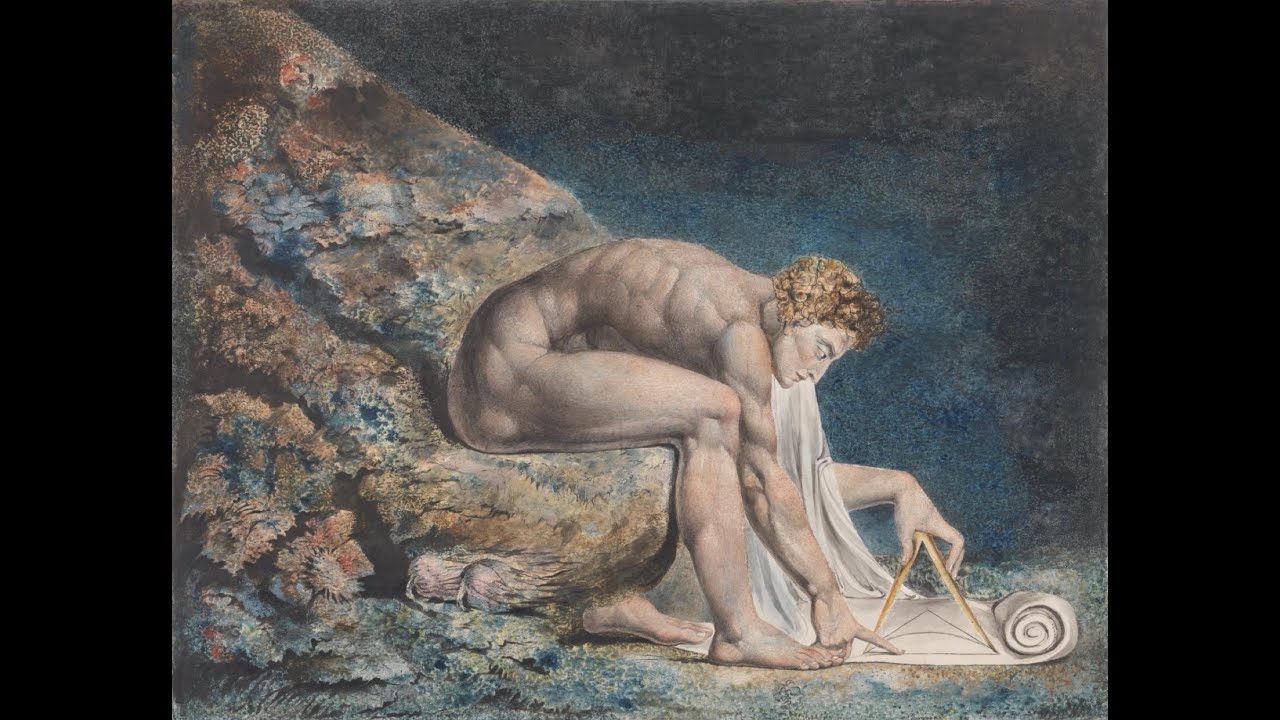
Blake famously critiqued the Enlightenment’s heroes—Newton, Bacon, and Locke—calling them “teachers of atheism.” His critique culminated in his famous Newton print, which serves as a visual warning against data-driven tunnel vision.
Blake depicts Newton crouched on the floor, animal-like and sterile, focused entirely on a compass. The visual progression of the print moves from color and texture on the left to “sterility and blackness” on the right. To Blake, the compass represented the “Ratio”—the limited, mathematical logic that omits the emotional and spiritual dimensions of the universe.
Blake contrasted Newton’s “single vision” with his own “fourfold vision.” He argued that focusing solely on what can be measured makes a creator blind to the “Infinite.” As Blake noted:
“He who sees the Ratio only sees himself only.”
In a world obsessed with metrics, Blake reminds us that the colorful, textured “rock” of creativity exists just behind us, if only we would look up from our instruments.
5. “I Must Create a System” (The Ultimate DIY Mythology)
Blake’s most “punk” move was his refusal to use the hand-me-down myths of Greece or Rome. Instead, he spent his life constructing a massive, idiosyncratic mythology featuring figures like Urizen (the tyrant of reason) and Los (the spirit of imagination).
This wasn’t just fantasy; it was radical social activism. Blake was a “vehement republican” who wore a red cap in the streets of London to support the French Revolution. He used his myths to hide critiques of “sexual oppression” and marriage laws, which he compared to slavery. He even used his mythology to take revenge on his enemies. After a physical altercation in his garden with a soldier named Private John Schofield led to a trial for sedition, Blake wrote Schofield into his epic Jerusalem as the villain “Skofeld,” depicted as a soul burning in hell-fire.
His rationale for this monumental undertaking is the ultimate call to action for any creator:
“I must create a system, or be enslav’d by another man’s. I will not reason & compare: my business is to create.”
Conclusion: The Interpreter’s Legacy
In his final years at Fountain Court, Blake’s “long-game” strategy finally paid off. A group of younger artists, including Samuel Palmer and John Linnell, began to seek him out, calling him “The Interpreter.” They saw what the Royal Academy could not: a man who had successfully remained “unfettered” by the standards of his time.
Even as he lay dying, Blake was reportedly singing of the heavenly visions he saw, a final act of rebellion against a world that tried to silence him. He left us with the haunting imagery of “dark satanic mills”—likely a reference to the Albion Flour Mills that dominated the Southwark skyline, or perhaps the “established Church” itself.
Two centuries later, Blake’s challenge remains: have we finally attained the “fourfold vision” necessary to see the Infinite, or are we still grinding away in the “mind-forg’d manacles” of a society that values the Ratio over the soul?Gemini Notebook can be inaccurate; please double-check its responses.
21-06 Romanticism – JMW Turner
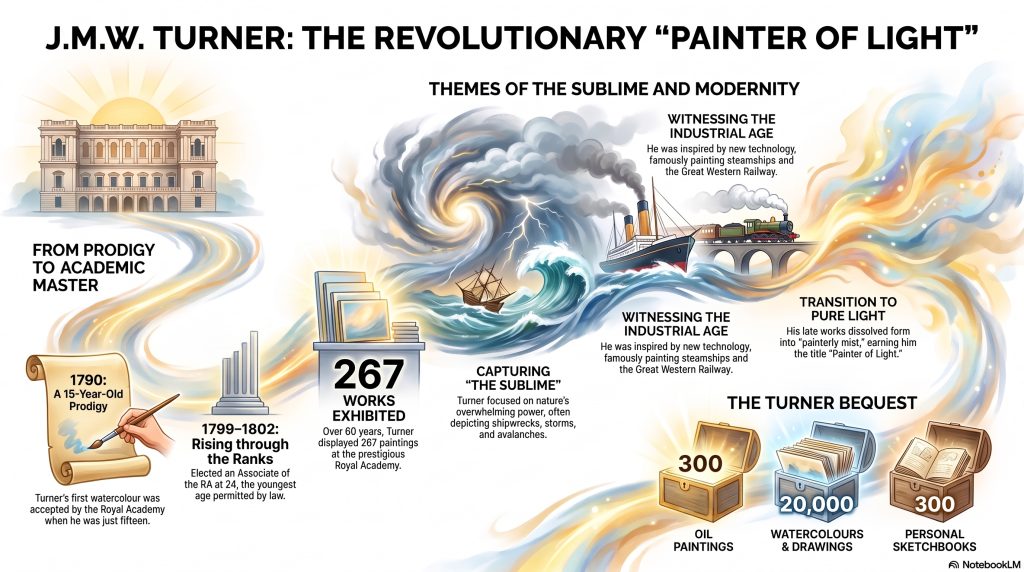
This talk provides a comprehensive overview of a lecture series and exhibition notes regarding the life and career of Joseph Mallord William Turner. It outlines the artist’s progression from a precocious student at the Royal Academy to a revolutionary master of the Romantic movement, known for his dramatic use of light and color. The text categorizes his vast body of work into thematic sections, such as his British landscapes, European travels, and the experimental sea studies found in his studio after his death. Detailed entries for specific masterpieces like The Fighting Temeraire and The Slave Ship explore his preoccupation with the sublime power of nature and the societal shifts of the Industrial Revolution. Additionally, the notes include a biographical timeline and personal anecdotes that characterize Turner as a prolific, yet secretive and controversial figure. Ultimately, the material serves as an educational guide to the Turner collection at Tate Britain, highlighting his transition from traditional topographical styles to nearly abstract final visions.
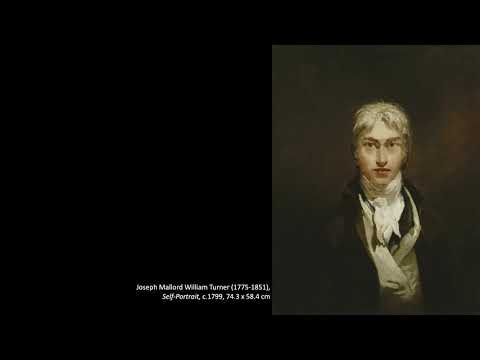
An entertaining conversation about Turner created by Google Notebook from my notes:
Joseph Mallord William Turner is a name that carries the hallowed weight of a national treasure. We envision the master of the sublime, the man who captured the ephemeral soul of the British landscape in a wash of gold and mist. Yet, the man behind the glowing canvases was a startling enigma, an unfiltered personality who stood in visceral contrast to the ethereal beauty of his work. While his reputed final words—”The Sun is God”—immortalized his lifelong obsession with light, the reality of his existence was far more terrestrial and far more secretive than his public reputation suggested. To truly understand Turner, we must look through the luminous dissonance of his paint to reveal the surprising, and often sordid, truths of a man who lived as a radical subverter of his own age.
The “Uncouth” Genius: A Study in Contradictions
The 19th-century art world was a theater of refinement—and Turner was its most glorious wrecking ball. He shattered the trope of the refined, aristocratic artist. Born the son of a Covent Garden barber and wig-maker, he remained a “Cockney” his entire life, never shedding his thick accent or his paint-stained clothes. In his later years, the physical man was a wreck; he lost his teeth and was forced to “suck his food,” a gritty, unfiltered detail that sat uncomfortably alongside the transcendent beauty of his canvases.
Nowhere was his personality more polarizing than in his relationship with money. While he eventually amassed a fortune worth millions in today’s terms, he was notoriously mercenary. In one legendary display of “sordid” business acumen, he would charge a patron 250 guineas for a painting and then demand an additional 20 guineas for the frame—a petty nickel-and-diming that baffled his contemporaries. This mercenary streak led the writer Walter Scott to offer a biting assessment:
“He will do nothing without cash, and anything for it. He is the only man of genius I ever knew who is sordid in these matters.”
The Admiral of World’s End: A Clandestine Double Life
For a man of such public fame, Turner was obsessively secretive, regarding domestic duty as a cage for the creative spirit. He famously dismissed marriage, stating, “I hate married men, they never make any sacrifice to the arts but are always thinking of their duty to their wives and their families, or some rubbish of that sort.” Yet, his life was far from solitary. For over a decade, he maintained a clandestine affair with Sarah Danby, a musician’s widow, with whom he likely fathered two daughters, Evelina and Georgiana—a family he largely kept in the shadows.
In his later years, this penchant for the clandestine reached absurd heights. He moved to a house in Chelsea—then a poor area plagued by cholera—near World’s End. There, he lived with his landlady, Sophia Caroline Booth, under the pseudonym “Admiral Booth.” To protect the ruse, he would have carriages drop him off several streets away from his home. This secrecy allowed him to exist as a commoner, observing the sea and the sky without the burden of the “Turner” brand, even as he lived as a millionaire in the shadows.
Luminous Skies and Dark Shadows: The Bedlam Irony
One of the most striking contradictions of Turner’s life is the darkness that haunted his family history. While his father was a devoted studio assistant, his mother, Mary Marshall, suffered from severe mental illness. In 1800, she was committed to Bethlem Hospital, the infamous “Bedlam.”
The human drama of this period is chilling. In 1804, the very year Turner reached a pinnacle of professional independence by opening a grand gallery in his own house to showcase his masterpieces, his mother died alone in the squalor of Bedlam. Though he was becoming a man of immense wealth who could have easily afforded private care, Turner never once visited her. The man who spent his career painting the most transcendent light in British history chose to leave his own mother in the darkest corner of the state asylum system, a repressed history he guarded as closely as his painting techniques.
Subversive Landscapes: The Protest in the Turnip Fields
Turner’s landscapes were frequently Trojan horses for radical political critique. His 1809 work, Ploughing up Turnips, near Slough, appears on the surface to be a patriotic “Georgic” scene of English farmers supporting the Napoleonic wartime economy. However, a deeper “Political” level reveals a surreptitious subversion.
Turner included specific, pointed anomalies: a broken plough, a nursing mother desperate for labor, and a heavy four-horse Berkshire plough that was notoriously inefficient. Most telling is his use of “vertical alignment”—a signature move where he linked important details through the composition. In this piece, he aligns the weeds in the foreground directly with the broken plough and, further back, the royal palace of Windsor Castle. By naming the location “near Slough,” he invoked John Bunyan’s Slough of Despond—a place that cannot be mended. It was a subtle, scathing suggestion that despite “Farmer George” (King George III) and his progressive agricultural efforts, the system was fundamentally broken for the poor.
A Laboratory of Light: Science and the First Recorded Tugboat
Turner was not merely an emotive painter; he possessed a scientist’s eye, deeply engaged with the technological upheaval of the Industrial Revolution. He was a student of the physical world who discussed pigments with Michael Faraday. Faraday even encouraged Turner to test the lightfastness of his colors by putting pigments in the sun and covering half with paper to observe the fade—a meticulous experiment that informed Turner’s luminous palette.
He studied the sun’s surface following lectures by the astronomer William Herschel and utilized Sir Francis Beaufort’s wind scale to anchor his storms in reality. Even his most atmospheric effects had scientific roots: the blood-red sunsets of 1816 were influenced by the massive 1815 eruption of Mount Tambora, which filled the atmosphere with volcanic dust. His fascination with the new also left a mark on the English language. In his masterpiece The Fighting Temeraire, Turner used the word “tugged” in the title to describe the steam-powered vessel pulling the old warship. According to the Oxford English Dictionary, this is the first recorded use of the word in that context—a literal linguistic record of Turner witnessing the birth of the modern age.
Soapsuds, Whitewash, and Vultures: The Violent Birth of Modernism
As Turner aged, his style became increasingly radical, moving away from defined shapes toward “flux and vortices” that predated Modernism and Impressionism by decades. This late style was met with vicious derision. Critics, and even his devoted patron John Ruskin, struggled to understand his ethereal canvases. One critic famously dismissed Snow Storm – Steam-Boat off a Harbour’s Mouth with a biting insult:
“Soapsuds and whitewash.”
Turner’s methods were equally theatrical and unorthodox. During the “varnishing days” at the Royal Academy, he would arrive at a canvas that was little more than a “crude blotch” and, in a flurry of activity with palette knives and rapid brushwork, finish the masterpiece in front of a bewildered audience. He was not deaf to the critics, however. He harbored a deep bitterness toward his detractors, once including a quote in a gallery catalogue about a “feast of vultures” to describe the critics circling his work near the end of his life. Though they called his work an “aberration of talent” or “mental disease,” Turner was simply painting a world the rest of the world wasn’t yet ready to see.
The Eternal Sun: A Legacy of Light and Litigants
Turner’s journey from a barber’s son in Maiden Lane to a tomb in St. Paul’s Cathedral is the definitive saga of a genius who refused to be categorized. He was the “First Modern Artist,” a man who looked at a steam engine and saw the same divine power he found in a storm.
His final act of complicated altruism was “Turner’s Gift”—a will intended to establish a charity for “decayed English artists.” In a final irony, his own family—the relatives he had spent a lifetime avoiding—contested the will. The legal battle lasted years, eventually overturning the charity and distributing his cash fortune among his kin. However, the nation secured the true treasure: his entire collection of finished and unfinished works. We are left with a question that defines the nature of genius: Can we truly separate the sublime beauty of the art from the “uncouth” and sordid life of the man who created it? Or is it the very friction between his difficult, clandestine life and his luminous work that makes his vision so enduring?Gemini Notebook can be inaccurate; please double-check its responses.
21-07 Romanticism – Turner’s Modern World
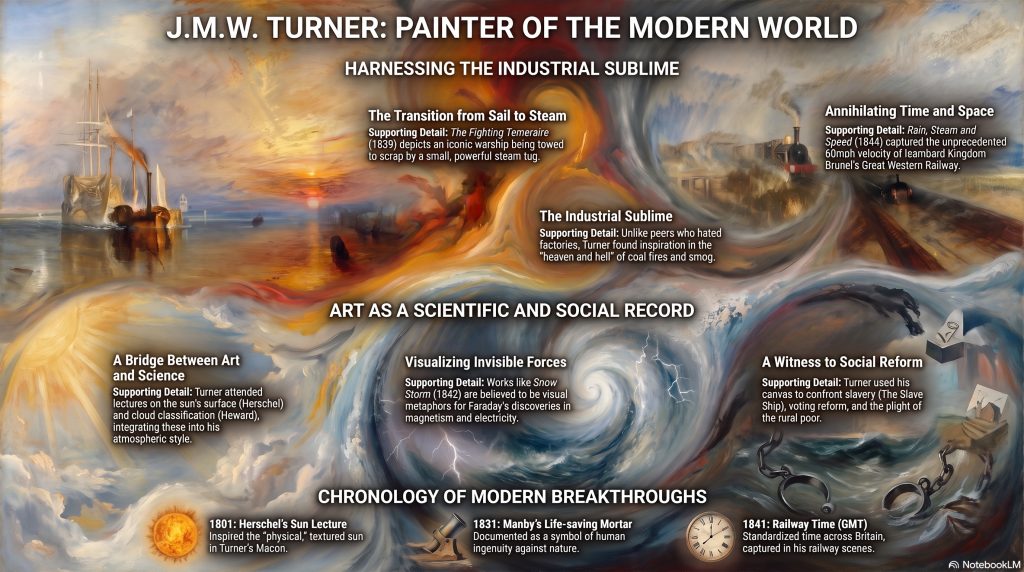
This talk provides a comprehensive analysis of J.M.W. Turner as a visionary artist who documented the radical shifts of the Industrial Revolution. Far from being a reclusive painter, Turner was deeply integrated into the intellectual and scientific circles of the nineteenth century, using his art to explore emerging theories on magnetism, meteorology, and light. His work captures a society in transition, moving from the traditional age of sail to the high-speed era of steam and modern machinery. The talk highlights how Turner addressed complex social and political issues, including parliamentary reform, the abolition of slavery, and the human cost of war. By blending the aesthetic traditions of the Old Masters with modern industrial subjects, Turner created a new visual language for the sublime. Ultimately, the sources present Turner as a pivotal figure who used his innovative style to reflect both the triumphs and the darker consequences of a rapidly changing world.
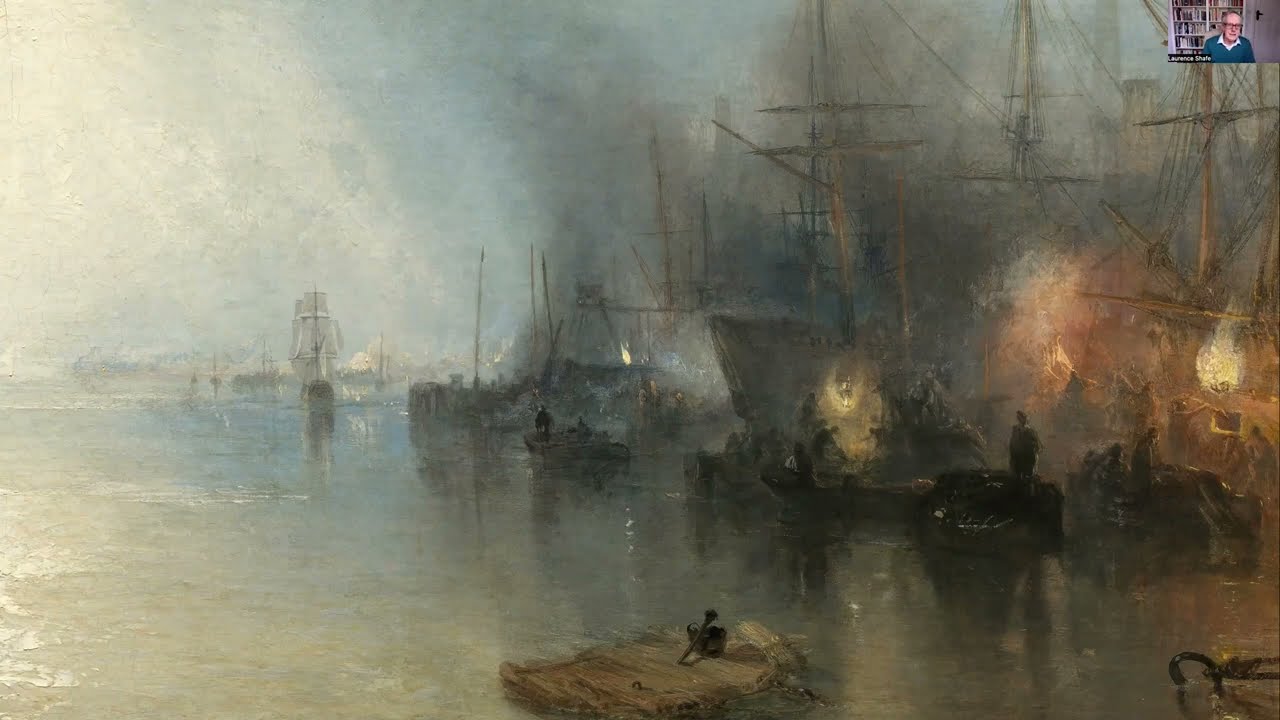
My notes on Turner and the Modern World
An interesting dialogue on Turner and the Modern World created by Google Notebook from my notes:
1. The Visionary in the Vortex
There is a persistent, near-mythic image of Joseph Mallord William Turner having himself lashed to the mast of a steamship, the Ariel, during a ferocious winter gale. He claimed to have remained there for four hours, nearly “swampt,” solely to witness the unmediated fury of the elements. Whether literal truth or a bit of self-fashioned lore, the anecdote perfectly encapsulates the man: Turner was not a passive observer of nature, but a participant in the violent birth of the modern era.
In our galleries, we too often reduce Turner to a purveyor of “pretty” atmospheres. Yet, to see him clearly, one must reconcile the “master magician” of the Royal Academy with the “scholarship boy” from Maiden Lane who never lost his thick Cockney accent. He was a man of friction—moving in the highest literary and scientific circles while being described by contemporaries as having a “rough exterior” and a “hard, cold demeanour.” He called mathematics “mithamatics,” yet he was the first artist to truly grasp the “annihilation of time and space” brought on by the Industrial Revolution. Turner was the bridge between the age of sail and the age of steam, a radical intellectual who used a maelstrom of paint to interrogate a world in flux.
2. The Solar Scientist: Painting the Sun’s “Ridges”
In April 1801, the astronomer William Herschel delivered a landmark lecture to the Royal Society, revealing that the sun was no longer a perfect, featureless orb of divinity, but a physical object defined by an irregular, turbulent surface. At the time, the Royal Society and the Royal Academy literally shared a wall at Somerset House. While Herschel spoke of solar physics, Turner was likely on the other side of that very wall, hanging his latest works.
The impact was immediate. In his 1803 masterpiece, The Festival Upon the Opening of the Vintage of Macon, Turner abandoned the flat, symbolic sun of the Old Masters. Instead, he employed a revolutionary technique, using thick impasto paint to create tactile “ridges” on the canvas. He was translating Herschel’s astronomical data into a physical language of paint. For Turner, the sun was a physical body of “flux and dynamism,” mirroring Herschel’s description:
“Herschel described the surface of the Sun as an object full of ‘openings, shallows, ridges, nodules, corrugations, indentations and pores.’”
3. Painting the Invisible: Magnetism and Energy
As Turner’s style matured into his late, atmospheric “vortices,” critics—bewildered by the lack of solid objects—dismissed his work as “soapsuds and whitewash.” They missed the radical science beneath the sprawl. Turner was a close friend of the mathematician Mary Somerville and the scientist Michael Faraday. He was fascinated by their discoveries regarding the Earth’s magnetic field and invisible forces of energy.
When we look at Snow Storm – Steam-Boat off a Harbour’s Mouth, we aren’t just seeing bad weather; we are seeing a visual metaphor for the energy passing through a magnetic field. Turner was attempting to paint the invisible. Somerville, who frequently visited his studio, recognized that his radical technique was the only way to express the hidden laws of the universe. She famously observed:
“No one can imagine that so much poetical feeling existed in so rough an exterior.”
4. The Industrial Sublime: Harnessing the Machine
While contemporaries like Charles Dickens or John Ruskin viewed the “Black Country” with horror, seeing only a “plague of smoke,” Turner found a new form of the Sublime. He did not share the romantic nostalgia that saw the railway as an invader of the pastoral. Instead, in Rain, Steam, and Speed – The Great Western Railway, he celebrated the locomotive as a testament to human ingenuity.
This was not a mere atmospheric sketch. Turner was looking at the mechanics: note the firebox, painted with such intensity it seems to be “almost eating through the metal casing.” He depicted Isambard Kingdom Brunel’s bridge not as an eyesore, but as a triumph. Turner even captured the profound social shift of “standardized time.” Before the Great Western Railway, time was local—Exeter was 15 to 20 minutes behind London. The speed of the trains forced the creation of Greenwich Mean Time (GMT). In the painting, a tiny hare—Britain’s fastest animal—runs for its life, unable to outpace the machine.
This transition is best captured in his “old darling,” The Fighting Temeraire. It is an elegy on the passing of sail: a ghostly, heroic veteran of Trafalgar being “tugged” to its scrap heap by a small, dark, fire-breathing steamship. Turner recognized that the sun was setting on the old world of mercantile power and rising on an age of steel and speed.
5. A Warning to the Future: The Dark Side of Progress
For all his excitement regarding progress, Turner’s political engagement was fiercely radical. He understood that the “Industrial Sublime” had a human cost. In Ploughing up Turnips near Slough, he used a complex pun to critique rural discontent. By naming the location “Slough,” he invoked John Bunyan’s Pilgrim’s Progress and the “Slough of Despond”—a boggy place of sin. The “broken plough” in the foreground and the “petticoat harvest” of women forced into the fields served as a biting commentary on the plight of the rural poor during the Napoleonic blockade.
His most haunting warning remains The Slave Ship (1840). Though Turner had once invested £100 in a Jamaican cattle plantation worked by enslaved labor, this painting was a fierce act of atonement and advocacy, exhibited to coincide with the first World Anti-Slavery Convention. He drew from the horrific 1781 “Zong” massacre, where 133 people were thrown overboard for insurance money. Turner’s use of deep reds—the colors of “blood and death”—merges the sea and sky into a single, terrifying scream. He paired the work with his own poem, “Fallacies of Hope,” to emphasize the grim reality:
“Before it sweeps your decks, throw overboard The dead and dying – ne’er heed their chains Hope, Hope, fallacious Hope! Where is thy market now?”
6. The Master Magician’s Secret Identity
In his final years, the “Admiral Booth” alias allowed Turner to disappear into the “strange atmosphere and light” of Margate. Living a double life with his landlady, Sophia Caroline Booth, he maintained an air of mystery that extended even to his professional life.
The legendary “Varnishing Days” at the Royal Academy were his stage. While other artists meticulously touched up their frames, Turner would arrive with a palette knife and “transparent stuff,” transforming a dull canvas into a masterpiece in a matter of hours while his peers watched in awe. He was a master magician who used “great thick lumps of chrome yellow” to achieve what no one else dared. He was a man who moved between worlds—from the Covent Garden barber shop to the tables of the literati—without ever compromising his ambitious, pushy, and uncompromising spirit.
Conclusion: The Sun is God
Turner was the ultimate bridge. He was born in a world of classical mythology and died in a world of modern science. He saw the fire of the sun and the fire of the locomotive as part of the same divine energy. His reported last words, “The Sun is God,” were not merely the ramblings of a dying man, but the final thesis of a lifetime spent documenting the physical and spiritual reality of light.
Today, as we navigate our own era of rapid technological upheaval and environmental change, we find ourselves in a new “Turner-esque” vortex. The question remains: are we looking at our modern world with the same inquisitive, courageous, and uncompromising eyes as the master of the maelstrom?
21-08 Romanticism – John Constable
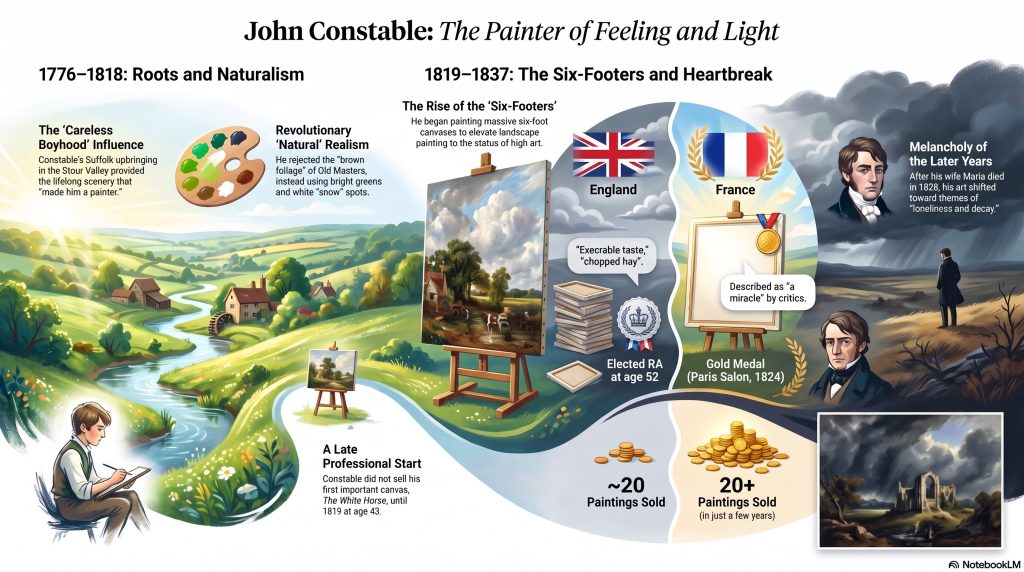
This talk provide a comprehensive biographical and artistic analysis of John Constable, a pivotal figure in the English Romantic movement. Centered around a series of lectures at Tate Britain, the text chronicles his transition from a Suffolk merchant’s son to a renowned landscape painter. The material highlights his revolutionary techniques, such as the use of bright colours and palette knives to capture atmospheric effects like scudding clouds and rainbows. It also explores his deeply personal connection to locations like Flatford Mill and Hampstead, as well as the profound grief following his wife Maria’s death, which darkened his later works. Detailed catalog entries describe specific masterpieces, including The Hay Wain and Hadleigh Castle, while situating his career within the broader socio-political context of the 19th century. Ultimately, the collection illustrates how Constable’s commitment to nature and emotional honesty permanently elevated the status of landscape art.
An engaging conversation on John Constable created by Google notebook from my notes:
To the casual gallery-goer, the works of John Constable are the ultimate aesthetic tranquilizers. His scenes of grazing cattle, sturdy elms, and placid rivers have been reproduced so relentlessly on tea towels, biscuit tins, and calendars that they have calcified into a kind of bucolic artifice. We view him as the architect of a “safe,” sentimental England—a purveyor of “chocolate-box” myths. Yet, to dismiss Constable as a painter of pretty pictures is to miss the radical, often frantic, and scientifically minded human behind the canvas. Beneath the veneer of aesthetic stasis was a man of intense passion, a revolutionary who spent his life in a state of scientific obsession and profound personal loss, dismantling the artifice of his era to reveal a visceral, often painful truth.
The Prophet Abroad and the Pariah at Home
It is one of the great ironies of British art history that the man who effectively invented the “English landscape” was largely treated with suspicion by the English establishment. While Constable struggled for decades to gain the status of Royal Academician—eventually securing it only at the age of fifty-two—he was being hailed as a visionary across the Channel. His 1824 showing at the Paris Salon didn’t just win him a gold medal from Charles X; it catalyzed a shift in French Romanticism, prompting Delacroix to famously repaint the background of his Massacre de Scio after witnessing the vibrant, broken color of Constable’s meadows.
| Metric of Recognition | The English Snub | The French Revolution |
|---|---|---|
| Commercial Success | Sold only twenty paintings in England during his entire sixty-year life. | Sold more than twenty paintings to French collectors in just a few years. |
| Institutional Status | Remained an “Associate” for ten years; elected a full Academician only in 1829. | Hailed as a “miracle” by critics; awarded Gold Medals by the King of France and the Society of Fine Arts, Lille. |
| Artistic Legacy | Criticized for “dirty” surfaces and “spotting” that lacked classical finish. | Directly inspired the Barbizon school and the precursors to Impressionism. |
Despite this continental acclaim, Constable’s stubborn provincialism kept him tethered to the Stour Valley. He famously rejected all invitations to travel and promote his work abroad, preferring the struggle of his native soil to the comforts of foreign patronage.
“I would rather be a poor man [in England] than a rich man abroad.”
Painting Paradise in a Climate of Collapse
The idyllic peace of Constable’s mid-career works is, in reality, a carefully constructed act of reactionary nostalgia. In 1816, the year he painted the seemingly serene Flatford Mill, the world was reeling from the eruption of Mount Tambora in Indonesia. This was the infamous “Year Without a Summer,” a period of environmental catastrophe that choked the atmosphere with volcanic ash, turning the English skies a haunting, bruised yellow.
While Constable was painting the “careless boyhood” of his memories, the actual countryside was in a state of violent upheaval. Famine was widespread, and the restrictive Corn Laws—which benefited mill-owning families like his own—sparked bread riots and dissent. By the 1820s, the “Swing Riots” saw the night sky lit by the fires of burning haystacks. Constable’s refusal to paint these fires, choosing instead to focus on the “slimy posts” of his youth, was not a failure to see reality, but a desperate attempt to preserve a disappearing world through the lens of memory.
The “Six-Footers” and the Science of the Sky
Constable’s radicalism was most evident in his “six-footers”—massive canvases that sought to elevate the humble landscape to the grand scale reserved for kings and gods in historical painting. To imbue these works with truth, he turned to the rigors of science. At Hampstead between 1821 and 1822, he became a “skying” obsessive, producing hundreds of atmospheric portraits. Guided by the meteorologist Luke Howard’s new nomenclature—cirrus, cumulus, stratus—Constable treated the sky as the “key note” of the organ, a scientific entity to be dissected rather than a background to be filled.
This was a total rejection of the “Old Master” style, which favored brown foliage and prescribed “bravura” over the messy reality of the natural world. He sought the “dewy light” of the present moment, finding divinity in the mundane textures of rural labor.
“The sound of water escaping from mill dams etc., willows, old rotten planks, slimy posts, and brickwork, I love such things.”
The Battle for Green and “Constable’s Snow”
The resistance to Constable’s naturalism often manifested in absurd pedagogical debates. The connoisseur Sir George Beaumont once famously lectured Constable that the grass in a proper landscape should be the “mellow brown of an old violin.” In a moment of quiet, defiant brilliance, Constable took a real violin and placed it upon the vibrant green grass of the lawn to illustrate how far the art world had drifted from the truth.
To capture the “freshness” of the world, Constable employed a technique of thick impasto and scattered white highlights. Critics, accustomed to the yellowed varnish of the past, mocked these highlights as “Constable’s snow.” They viewed his refusal to use the “filth and dirt” of traditional glazes as a lack of skill, failing to realize he was capturing the fleeting glint of light on a damp leaf—a precursor to the modern understanding of optics.
Art as an Emotional Autopsy: The Death of Maria
In 1828, the “face of the World” changed forever for Constable. His wife Maria, the love of his life for whom he had waited seven years to marry, died of tuberculosis. She left him with seven children and a £20,000 inheritance—wealth that arrived too late to save her. In a tragic spiral of grief and poor judgment, Constable spent much of this fortune on a disastrous venture into mezzotints, attempting to engrave his works for a public that remained largely indifferent.
His art subsequently shifted from a celebration of light to an emotional autopsy. The bright Suffolk scenes were replaced by the desolate, crumbling towers of Hadleigh Castle and the turbulent, jagged energy of Salisbury Cathedral from the Meadows. In the latter, Constable included nine lines of poetry about a woman killed by a thunderstorm—a direct reference to the lover lost in his own life. The landscape had become a vessel for a shattered psyche, where rainbows were no longer just optical phenomena but desperate symbols of faith in a world of mourning.
“I shall never feel again as I have felt, the face of the World is totally changed to me.”
The Practical Logic of the Hay Wain
Even in his most iconic work, The Hay Wain, Constable’s “truth” was grounded in the grit of his upbringing as a miller’s son. The famous wagon standing in the water is not a romantic trope; it is a display of his deep knowledge of the rural economy. In high summer, wooden wheels would shrink and metal rims would loosen; driving the wagon into the stream was a practical necessity to expand the wood and tighten the iron.
Every element was a calculated choice in the pursuit of balance. Even the black dog on the riverbank, a late addition to the composition, serves to lead the viewer’s eye through the frame, grounding the bucolic scene in the movement of living things.
A Legacy of Feeling
John Constable’s life was a testament to the courage required to paint “the truth” when the world only wants “bravura.” He proved that landscape is not merely a backdrop for human history, but a profound reflection of human emotion. For him, “painting is but another word for feeling,” and his legacy is found not in the stillness of a museum gallery, but in the restless, scudding clouds and the “slimy posts” he so dearly loved.
As we look at our own rapidly changing environments today, we are left to wonder: which scenes of our own “careless boyhood” would we fight to preserve? Constable’s work reminds us that the most radical act an artist can perform is to look at the world with total, unblinking honesty, finding the sublime in the very things the rest of the world has forgotten how to see.Gemini Notebook can be inaccurate; please double-check its responses.
21-09 The Gothic and its Revival
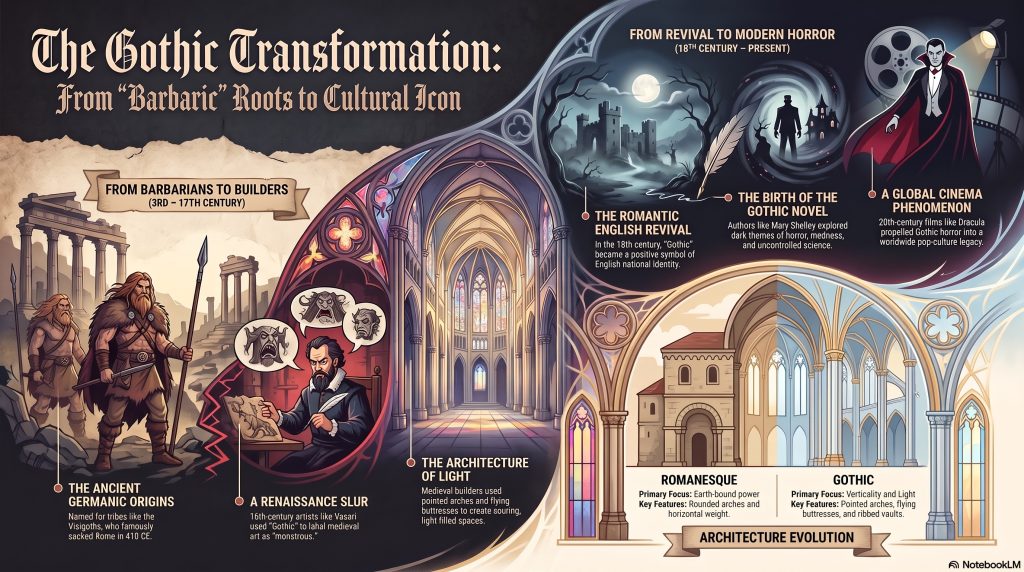
This talk outlines the historical evolution of the Gothic style, tracing its journey from a tribal designation to a multifaceted cultural movement. Initially, the term “Gothic” was used pejoratively by Renaissance artists like Raphael and Vasari to describe medieval architecture as barbaric and monstrous compared to classical ideals. However, the eighteenth and nineteenth centuries saw a dramatic revival of the style in Britain, where it was reimagined as a noble expression of national identity and engineering prowess. Beyond architecture, the talk explores the Gothic’s influence on literature and film, specifically through the development of the horror genre and themes of dark mystery. Modern interpretations continue to utilize these motifs of melancholy and alienation to critique the complexities of the industrial and post-industrial world. Ultimately, the sources present the Gothic as a shifting aesthetic that balances religious piety with deep-seated psychological fears.
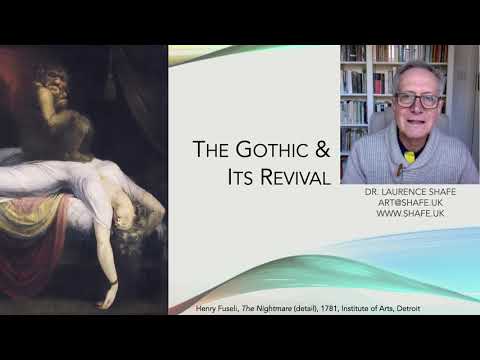
My notes on the Gothic and its revival
An interesting conversation on the gothic and Its Revival created by Google Notebook from my notes:
It is one of the great ironies of cultural history that a word now synonymous with majestic cathedrals, classic horror, and a global subculture began its life as a vicious slur. The term “Gothic” was not a self-chosen label for the master builders of the Middle Ages; it was an insult hurled by later generations to dismiss a millennium of human achievement as a “tidal wave of ignorance.” To understand the Gothic is to understand how a single word can represent both the soaring divinity of a medieval vault and the gritty, urban shadows of a modern-day Batman.
“Gothic” Was Originally the Ultimate Art History Diss
In its original context, “Gothic” was a synonym for “monstrous.” During the Italian Renaissance, artists and thinkers viewed the thousand years following the fall of Rome as a stagnant “Dark Age.” Seeing themselves as the glorious “rebirth” of classical wisdom, they viewed medieval artisans as little more than architectural vandals.
Italian masters like Raphael and Giorgio Vasari used the term to describe the architecture of northern Europe with utter contempt. Raphael famously theorized that the pointed arches of the North were merely crude echoes of “primitive huts” formed by Germanic forest dwellers who bent trees together to create shelter. Vasari was even more scathing, describing the style as a “disorder” that was “monstrous and barbarous.” To the Renaissance mind, the Goths—the Germanic tribes who sacked Rome in 410 CE—had destroyed civilization, and this “Gothic” art was the enduring proof of their depravity.
The “Barbaric” Arch Was Actually a High-Tech Breakthrough
While Renaissance critics saw “disorder,” the architects of the Middle Ages were actually the high-tech engineers of their day. What Raphael dismissed as “primitive” was, in reality, a structural revolution that allowed humanity to reach for the heavens.
The transition from the rounded Roman arch to the pointed Gothic arch was a massive leap in engineering. Unlike the rounded arch, the pointed arch supported significantly greater loads. At Lincoln Cathedral, the original structure was consecrated in 1091, but it was the “upgraded” response to an 1185 earthquake that truly defined its Gothic majesty. Rebuilt with flying buttresses and ribbed vaulting, the cathedral’s weight was moved to the exterior, allowing walls to become thin skins of light-filled glass.
Inside the St Hugh’s Choir, one finds the “crazy ribbed vaulting”—a daring tierceron vault that represents the cutting edge of 12th-century technology. These “crazy vaults” created a vision of the Heavenly Jerusalem on earth. Even the 19th-century critic John Ruskin, usually a harsh judge, was floored by the result, declaring Lincoln “out and out the most precious piece of architecture in the British Isles and roughly speaking worth any two other cathedrals we have.”
Modern Monsters Born from the Age of Reason
Paradoxically, the Gothic obsession with horror did not vanish with the arrival of modern science; it was fueled by it. During the 18th-century Enlightenment—the “Age of Reason”—an entirely surprising obsession with the irrational emerged. As science began to illuminate the physical world, artists became fascinated by the “chiaroscuro of the industrial mind”—the unsettling shadows that reason could not dispel.
This Neo-Gothic tension is perfectly captured in Joseph Wright of Derby’s painting, An Experiment on a Bird in the Air Pump. The scene depicts a natural philosopher depriving a rare cockatoo of air to demonstrate a vacuum. The lighting is profoundly supernatural, casting deep shadows across a group of onlookers whose reactions range from cold scientific curiosity to a harrowing concern for the bird.
This era proved that the more we try to illuminate the world, the more we fear the unknown. While poets were indulging in hallucinatory drugs to reach new Gothic heights of the mind, Mary Shelley was writing Frankenstein, using the language of monsters to warn of a science that had run out of control.
The Gothic Revival Was a Protest Against Modernity
By the 19th century, the Gothic returned as a weapon against the Industrial Revolution. As cities became sprawling, impersonal, and soot-covered, architects like Augustus Pugin looked to the medieval past for “noble virtues” and spiritual stability.
Pugin’s mania for the style was absolute. When the Palace of Westminster was rebuilt starting in 1838, the Gothic style was chosen specifically to reject the “classical” aesthetic associated with revolutionary France. Pugin’s work on the Palace is a “confusion of detail,” a manic obsession with medieval ornamentation that turned the House of Lords into something resembling a church.
For the Victorians, the Gothic Revival was “soporific”—a dream of an idealized past that allowed them to escape the harsh, mechanical reality of the 19th century. But this obsession carried a human cost: Pugin worked with such relentless, driving intensity that he eventually drove himself mad, dying at the age of only 40.
The Language That Makes Sense of the 20th Century
As the world entered the 20th century, the “fantasy horror” of the Gothic was eclipsed by the “real horror” of mechanized warfare in 1914. Yet, the Gothic remained the only language capable of describing a broken, modern world.
Thinkers and writers found Gothic metaphors lurking in every corner of modernity:
- Karl Marx famously analyzed capitalism as “vampiric,” describing consumers as “deluded victims mesmerized” by the fetishism of commodities.
- Joseph Conrad’s Heart of Darkness utilized Gothic tropes to expose the darkness at the core of the Imperial project.
- T.S. Eliot gave us the image of the “phantom London” in The Wasteland, a city haunted by the ghosts of the modern age.
Cinema eventually became the ultimate “Gothic haunted house,” using the interplay of light and shadow to explore alienation. From the silent, jagged angles of Nosferatu to the psychological depths of modern noir, the Gothic remains our primary tool for navigating the nature of existence.
The Enduring Shadow
The Gothic has survived for centuries because it is a flexible language for times of intense change. It was born as a slur, matured as a technological revolution, and transformed into a protest against the coldness of industry.
If the Gothic is reborn whenever science and reason feel overwhelming, we are surely due for a new resurgence. In our current age, the “black box” of artificial intelligence is the new Dark Age—a technology we have created but no longer fully understand. Just as the Renaissance saw a “tidal wave of ignorance” in the past, we may be looking at a future where our own digital creations become the ghosts in the machine. If the Gothic is the language of the sublime and the terrifying, what new monsters are we currently creating?Gemini Notebook can be inaccurate; please double-check its responses.
21-10 Romanticism – Regency to Victorian, 1810-1840
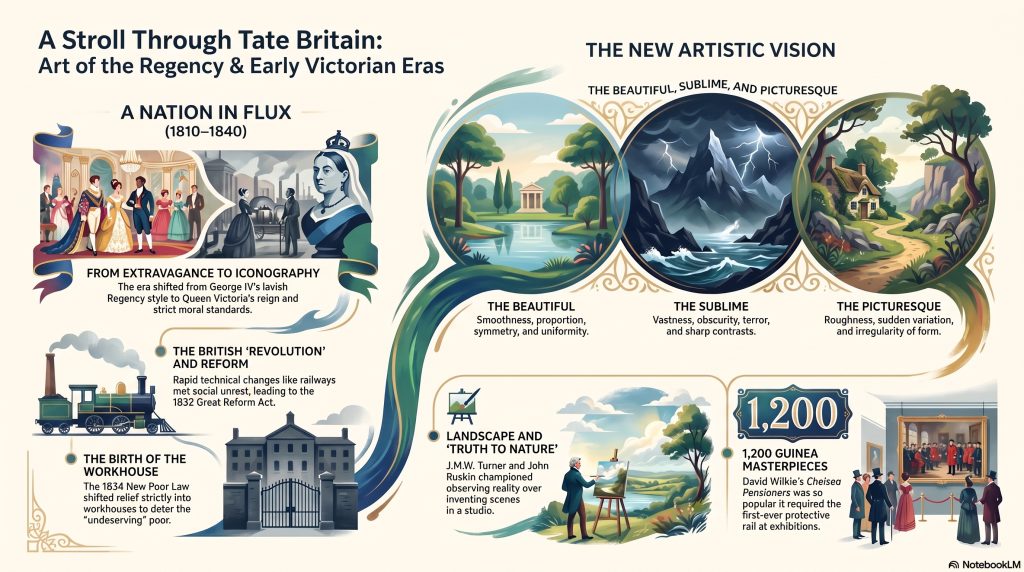
This talk examines the artistic and social shift in Britain from the Regency to the early Victorian era, spanning 1810 to 1840. The text details the lives of monarchs like George IV and Victoria alongside a backdrop of industrial progress and intense civil unrest, including the Peterloo Massacre and the Great Reform Act. A primary focus is placed on the evolution of landscape painting, highlighting J.M.W. Turner’s work and John Ruskin’s belief that art should represent “truth to nature” rather than artificial studio conventions. The talk further defines aesthetic categories like the sublime, the beautiful, and the picturesque, using artists such as George Morland to illustrate these ideals. Ultimately, the material connects historical upheaval with the emergence of a distinctly British romantic style that sought beauty in the natural world.
My notes on the change from the Regency art world to the Victorian 1810-1840
A conversation on the changes from the Regency art world to the Victorian created by Google Notebook from my notes:
1. Introduction: The Stuffy Veneer and the Radical Reality
We are often guilty of viewing the years between 1810 and 1840 through a sepia-toned fog of rigid formality—a world of high collars, polite tea, and the supposed “stuffy” stolidity of academic portraiture. Yet, beneath this veneer of pastoral artifice lay a society in the throes of a visceral transformation. This era served as a high-tension bridge between the decadent Regency and the burgeoning Victorian world, defined by a dizzying cultural zeitgeist of rapid technical change—the roar of the railway and the hiss of the steamship—and a profound undercurrent of social dissent.
As the Napoleonic Wars ended, the British landscape became a battleground of ideas. From the extravagant scandals of George IV to the “King Mob” chaos of the Gordon Riots and the bloody fields of Peterloo, the era was anything but quiet. Artists were no longer mere decorators; they were seekers of “moral and material truth” in an age of intense social stratification. To understand the art of this period is to look past the gilded frames and see a nation grappling with the birth of modernity.
2. The “Picturesque Hunter”: When Nature Became a Trophied Kill
In this period, the British obsession with the landscape gave rise to the concept of “The Picturesque”—a sophisticated aesthetic middle ground. While the “Beautiful” was characterized by classical symmetry and the “Sublime” by a terrifying vastness that inspired awe, the Picturesque celebrated roughness, sudden variation, and the charm of the irregular.
This intellectual shift birthed the “picturesque-hunter.” Armed with “Claude Glasses”—tinted portable mirrors used to frame and darken the view into a curated masterpiece—these tourists swarmed the Lake District. They weren’t merely admiring nature; they were engaged in a form of aesthetic conquest. They sought out “savage landscapes” to bring home as pictorial trophies, effectively domesticating the wild for the comfort of their drawing rooms.
Gilpin saw the hunt for the picturesque as equivalent to hunting animals but a more worthy cause. Hunters of the picturesque would boast of their encounters with savage landscapes, ‘capturing’ wild scenes as pictorial trophies to sell or hang in frames on their drawing room walls.
3. The Queen’s Secret Gallery: Victoria’s Uninhibited Eye
The popular image of Queen Victoria remains the national icon of strict personal morality, the ultimate architect of 19th-century prudishness. However, her private journals and the secret geography of her home reveal an unabashed appreciation for the sensuous. Victoria possessed a remarkably open attitude toward the nude, viewing the human form with an eye that was both physical and uninhibited.
She and Prince Albert frequently exchanged paintings of nudes as birthday gifts. One of her most prized possessions was Franz Xaver Winterhalter’s Florinda, a lush, physical work depicting a group of semi-nude women being spied upon while bathing. Far from being relegated to a dark corner, the painting was hung at Osborne House directly opposite the writing desks used by the Queen and her husband, serving as a constant, sensuous presence in their daily work life.
[She] described [Florinda] in her journal as “a most lovely picture containing a group of beautiful women”. The Queen was uninhibited and attracted to the sensuous and the physical and enjoyed nudity.
4. The Waterloo Rail: The Painting That Needed a Bodyguard
In 1822, the Royal Academy witnessed a phenomenon that signaled a shift in the cultural center of gravity. David Wilkie’s Chelsea Pensioners Reading the Waterloo Dispatch was so overwhelmingly popular that, for the first time in history, a protective rail had to be installed to hold back the throngs. The Duke of Wellington paid a staggering 1,200 guineas for the work, a sum matched by publishers just for the rights to the prints.
Why did this “genre painting” strike such a chord? It moved beyond the cold abstractions of history painting to find the human heart of the news. Wilkie filled the canvas with visceral stories: a pregnant soldier’s wife waits in agonizing suspense for news of her husband; a black bandsman from the 1st Foot Guards, who had witnessed the execution of Louis XVI, stands as a witness to history; and an old veteran, a survivor of the 1759 Battle of Quebec, reads the dispatch while another soldier ignores the law to eat an out-of-season oyster. It was a painting of the people, by the people, and for a public hungry for contemporary truth.
5. The Three-Earth Walk: The Human Cost of Social Engineering
While the elite debated the merits of the Picturesque, a more brutal form of social engineering was reshaping the British countryside. The Speenhamland System and the New Poor Law of 1834 created a “universal system of pauperism.” In a calculated move to dodge parish taxes, wealthy landowners would systematically pull down the cottages of their tenants, forcing laborers into neighboring parishes so the estate owners wouldn’t have to fund their relief.
The human cost was measured in miles and misery. One haunting account from the era of the “Swing Riots” details a man forced into this nomadic existence by his landlord’s tax-evasion strategy. Every single day for forty years, he walked five miles to reach his work and five miles back. By the end of his working life, he had covered a distance equivalent to walking three times around the earth—a staggering testament to the structural cruelty hidden behind the era’s rolling green hills.
6. The “Bird-Nest” Rockstar: How the Lowest Art Form Hit the Bedroom
In the rigid hierarchy of the arts, still life was long considered the “lowest category,” a mere technical exercise compared to the heights of history painting. Yet, William Henry Hunt—affectionately known as “Bird-nest Hunt”—became the unlikely rockstar of the watercolor world. His work was a naturalistic evolution of the 16th and 17th-century Dutch still-life tradition, but Hunt moved the subjects out of the studio and onto mossy, outdoor banks.
His technical mastery of color and light was so profound that John Ruskin, the era’s most formidable critic, declared him the “finest ever painter of still life” and hung a Hunt in his own bedroom. The demand for his humble subjects—a few eggs in a nest, a sprig of primrose—became a legitimate obsession among the ruling class.
Thackeray said ‘If I were the Duke of Devonshire, I would have a couple of Hunts in every room in all my houses’.
7. Conclusion: Seeking Truth in an Uncertain Age
The art of the Regency and early Victorian eras was far more than a collection of pretty objects; it was a desperate search for anchor points in a world of shifting sands. As John Ruskin astutely noted, the “romantic love of beauty” was a uniquely modern development—a necessary pursuit of the satisfaction that could no longer be found in the “ordinary life” of an industrializing nation. By demanding a “truth to nature” that was both moral and material, artists provided a way to process the chaos of the age.
As we face our own era of dizzying technological shifts and social stratification, we might ask: where do we seek our own “moral and material truth” today, and which of our modern landscapes will be remembered as the trophies of our time?Gemini Notebook can be inaccurate; please double-check its responses.