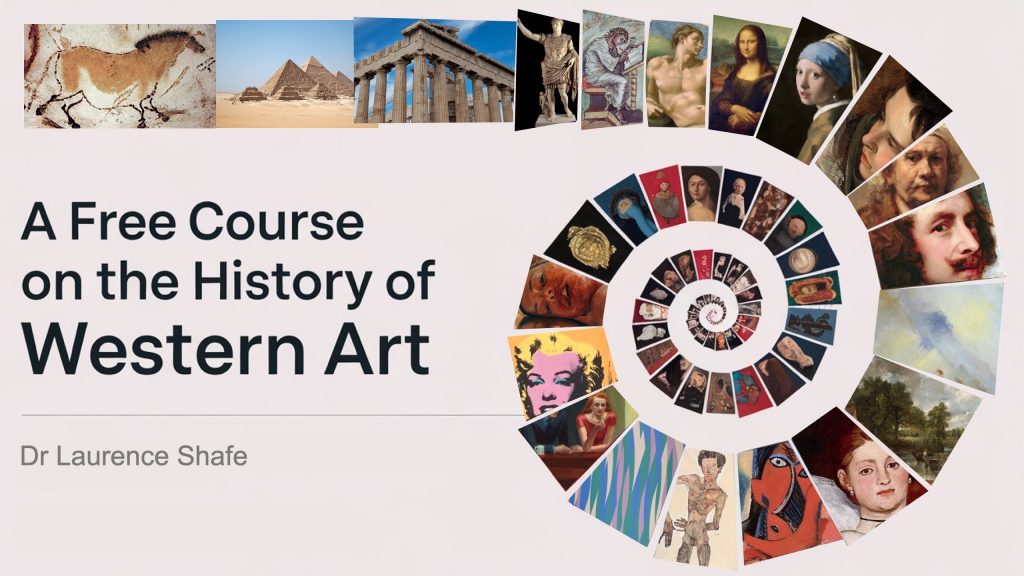
Modernism in art was not a single style but a sustained cultural project running from approximately 1860 to 1970, united by the conviction that traditional forms of representation, inherited conventions, and the established relationship between art and its audience had all to be questioned and, where necessary, abandoned. Beginning with the Impressionists’ challenge to academic painting and accelerating through Cubism, Abstraction, Dadaism, and Surrealism, modernism progressively dismantled the visual language that European art had developed since the Renaissance. It was driven by intellectual currents — Freudian psychology, Marxist social theory, Einsteinian physics — that together suggested that the stable, orderly world that traditional art had depicted was a fiction. Art had to reflect a reality that was fragmented, subjective, and in constant motion. The result was an art of extraordinary diversity and creative ambition that transformed not only painting and sculpture but architecture, design, film, and music.
38-01 The 20th Century British Nude
38-02 Modernism – Picasso 1932
38-04 Modernism – 20th Century British Life Painting
38-05 Modernism – New Ways of Seeing
What Was Modernism — And When Did It Begin? Modernism is most usefully understood not as a style but as a set of attitudes: a rejection of tradition for its own sake, a commitment to formal experiment, a belief that art must respond to the conditions of modern life rather than offering escapist consolation. Its beginnings are variously dated to Manet’s scandalous Olympia (1865), Cézanne’s structural experiments of the 1880s, or the eruption of Cubism around 1907. All of these were moments of rupture — of art deliberately breaking with what had come before.
The Impact of New Technologies: Modernist art emerged alongside the technologies that transformed modern life: the railway, electricity, the telephone, the aeroplane, cinema. These new speeds and new distances changed how people experienced the world — and art had to change too. Futurists painted the dynamism of machines; Cubists fragmented objects as if seen simultaneously from multiple viewpoints; filmmakers discovered that moving images could create entirely new kinds of narrative time.
Cézanne — The Father of Modernism: Paul Cézanne (1839–1906) is the figure to whom almost every subsequent modernist movement traced its origins. His insistence on “treating nature by the cylinder, the sphere, and the cone” — reducing perceived reality to its underlying geometric structures — pointed the way to Cubism. His equal insistence on the reality of the picture surface, rather than the illusion of depth, pointed the way to abstraction. For Picasso, Matisse, and Braque, Cézanne was simply “the father of us all.”
The Shock of the New — Audiences and Incomprehension: One of the defining features of modernism was the scandal it provoked. The Impressionist exhibitions of the 1870s were greeted with ridicule; the Armory Show of 1913 that brought European modernism to America caused genuine public outrage; Stravinsky’s Rite of Spring provoked a riot at its premiere. This pattern of provocation and rejection became almost a badge of authenticity for modernist artists: incomprehension by the majority was taken as evidence of genuine originality.
Abstraction — The Logical Conclusion: If art was not obliged to represent the visible world, what else could it do? By 1910, Kandinsky, Mondrian, and Malevich had each independently arrived at a fully non-objective art — painting that referred to nothing outside itself. Kandinsky’s early abstractions used colour and line to evoke musical experience; Mondrian reduced painting to primary colours and right angles; Malevich created a Suprematism of pure geometric form. All argued that abstract art could reach deeper truths than representation ever could.
The Death of Modernism — Or Its Transformation: By the 1960s, critics were beginning to detect signs of exhaustion in the modernist project. Pop Art, Minimalism, and Conceptual Art each represented a reaction against the high seriousness and formal purity of modernist abstraction. Postmodernism, emerging in the 1970s and 1980s, rejected modernism’s faith in progress and originality, embracing instead quotation, irony, and the mixing of high and popular culture. Whether this represented the end of modernism or simply its next phase remains one of the most debated questions in contemporary art.