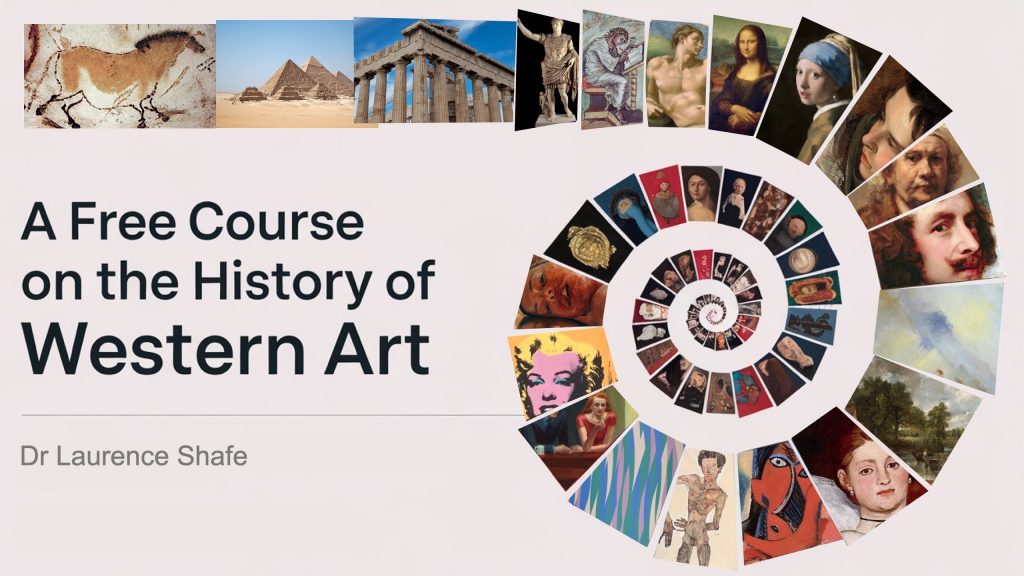
This section is a series of articles on aspects of AI that have interested me over the years. I will be publishing them on Substack from January 2027 when I have completed my “History of Western Art”.
Page Contents
62-01 What is AI?
I consider what we mean by intelligence, the Turing Test and its power and limitations and what might be meant by Artificial Super Intelligence.
62-02 Can AI be Creative?
AI systems are conventionally considered to be simply regurgitating what they have scanned. I argue that they can be truly creative and explain why.
62-03 Are AI Systems Conscious
This section explores what we mean by consciousness and the various theories that have been put forward.
62-04 AI and Art History
This section examines the various areas where AI can be applied.
- Image Creation and Editing
- Video Creation
- Art Criticism
- Art Restoration
- NFTs
- Research
- Ethics
62-05 The Limits of AI
Will AI lead to utopia or dystopia? Are current AI systems fundamentally limited or flawed. What are the real dangers?
The relationship between artificial intelligence and art is one of the most contested and rapidly evolving topics in contemporary culture, raising fundamental questions about creativity, authorship, originality, and what it means to make a work of art. AI systems capable of generating images — from early neural style transfer programmes of the 2010s to the large diffusion models of the 2020s such as Midjourney, DALL-E, and Stable Diffusion — have made it possible for anyone to produce sophisticated visual imagery from text descriptions in seconds. This has excited artists who see it as a powerful new tool, alarmed others who fear it will devalue human creative skill and eliminate livelihoods, and provoked philosophers and lawyers to revisit fundamental assumptions about intellectual property and aesthetic value. The history of art suggests that every new technology — photography, cinema, digital editing — has been greeted with similar anxieties and has ultimately expanded rather than contracted the possibilities of human creativity. Whether AI will follow this pattern, or whether it represents something genuinely different in kind, is the most urgent question facing the art world today.
What Is AI Art? A Brief Technical Overview: Modern AI image generators work by training large neural networks on billions of image-text pairs, learning statistical associations between words and visual features. When prompted with a text description, the model generates an image by iteratively refining random noise according to the patterns it has learned. The results can be strikingly beautiful, uncannily coherent, and sometimes genuinely surprising — but they are produced by a process of statistical interpolation rather than anything that resembles human understanding or intention.
The Question of Authorship — Who Made This? When a human artist uses an AI tool to generate an image, who is the author? The person who wrote the prompt? The engineers who designed the model? The millions of human artists whose work was used to train it? These questions are not merely philosophical: they have immediate practical implications for copyright law, which in most jurisdictions requires a human creator. Courts and legislators in multiple countries are currently wrestling with these questions, with outcomes that will profoundly shape the creative economy.
The Training Data Problem — Art Made From Other Art: AI image generators are trained on vast datasets scraped from the internet, including enormous quantities of images by living artists who did not consent to have their work used for this purpose and receive no compensation. This has generated fierce controversy and a number of lawsuits. Artists have discovered that they can “style-match” specific living artists — generating images “in the style of” named individuals — raising questions about whether a visual style can or should be protected.
Photography’s Lesson — New Tools Change but Don’t Destroy Art: The history of photography offers a useful precedent. When the camera was introduced in the 1830s and 1840s, many predicted it would destroy painting — and indeed it did destroy the market for portrait miniatures. But it also liberated painting from the obligation to document the world, helping to create the conditions for Impressionism, Abstraction, and all of modern art. AI may similarly destroy some forms of commercial image-making while opening up new creative possibilities that we cannot yet foresee.
AI as Artistic Tool — New Possibilities for Human Creativity: Many artists are enthusiastic about AI as a creative tool, using it in conjunction with traditional skills to explore visual ideas at a speed and scale that would otherwise be impossible. The artist Refik Anadol, for example, uses machine learning to create immersive data sculptures of extraordinary beauty. For these artists, AI is no different in principle from any other tool — it extends the artist’s reach without replacing the artist’s vision.
The Deeper Question — What Is Creativity? The deepest challenge that AI art poses is philosophical: if a machine can produce images that are indistinguishable from those made by a human, what exactly is the distinctive value of human creativity? Is it the process — the struggle, the intention, the biographical meaning — or only the product? And if a machine can produce beauty, does beauty require a creator who can experience it? These are ancient philosophical questions that AI is forcing us to answer in new and urgent ways.