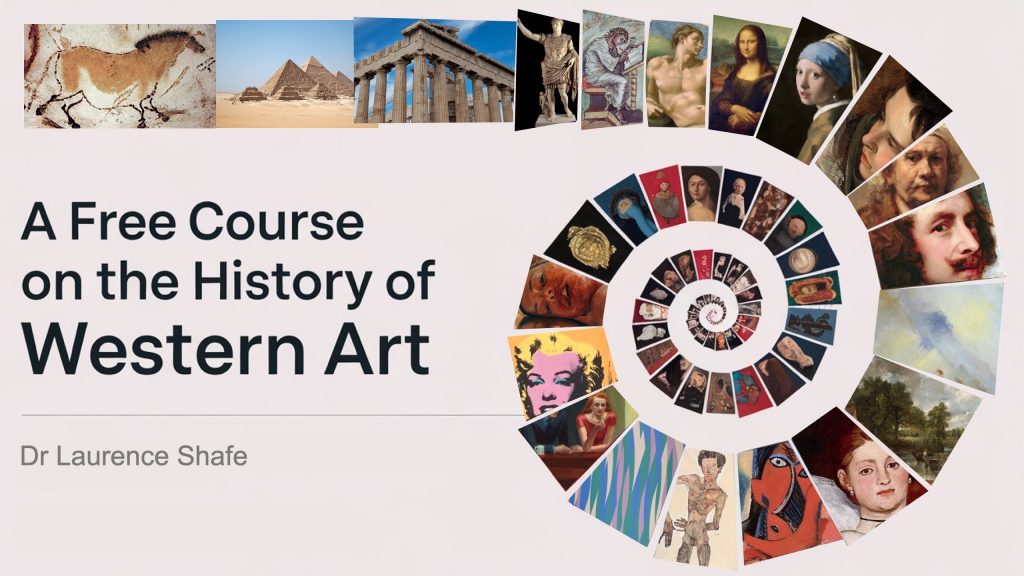
American Realism and Modernism in the first half of the twentieth century represents a complex dialogue between the pull of European avant-garde influence and the assertion of a distinctly American artistic identity rooted in the experience of the continent’s landscapes, cities, and social conditions. The Ashcan School of Robert Henri and John Sloan had established an urban realist tradition in the 1900s; Edward Hopper deepened it into something of almost unbearable psychological intensity, his paintings of diners, motels, and empty offices capturing the loneliness at the heart of American prosperity. Georgia O’Keeffe transformed the desert landscapes of New Mexico into an art of close observation and near-abstraction, her flower paintings among the most sensually precise images in American art. Meanwhile the Regionalists — Thomas Hart Benton, Grant Wood, and John Steuart Curry — celebrated rural American life with a monumental clarity that was both genuinely populist and politically contentious. The period ended with the eruption of Abstract Expressionism, which decisively shifted the centre of gravity of the art world from Paris to New York.
Edward Hopper — The Loneliness of Modern America: No painter has captured the emotional texture of modern American life more precisely than Edward Hopper (1882–1967). His diner Nighthawks (1942) — four figures isolated in a brightly lit late-night café, the dark streets of the city pressing against the glass — has become one of the iconic images of the twentieth century. Hopper’s America is a place of silence, separation, and the particular loneliness of people who happen to share the same space without truly connecting.
Georgia O’Keeffe — The American Desert as Abstract Vision: Georgia O’Keeffe (1887–1986) is one of the most significant American artists of the century, a painter who transformed the desert landscapes, bones, and flowers of New Mexico into images of astonishing formal beauty and erotic intensity. Her close-up paintings of flowers — magnified to fill the canvas, their colours saturated, their forms simultaneously botanical and abstract — remain among the most distinctive and widely reproduced images in American art.
The Ashcan School — Art from the Streets: The Ashcan School, centred on Robert Henri and his circle in New York in the early 1900s, rejected the genteel academic tradition in favour of a raw urban realism that embraced the crowded streets, boxing matches, clotheslines, and tenement life of the immigrant city. Their work was controversial precisely because it refused to look away from the messy, vital reality of modern urban life — a democratic aesthetic that influenced American art for decades.
Regionalism — American Life as Epic Subject: The 1930s saw a reaction against both European modernism and urban sophistication in the form of American Regionalism. Thomas Hart Benton, Grant Wood, and John Steuart Curry celebrated rural Midwestern America — its farmers, landscapes, and folk traditions — with a monumental, mural-like style influenced by Renaissance masters but committed to American subjects. Grant Wood’s American Gothic (1930) is one of the most recognised and most ambivalent images in American art history.
The Federal Art Project — Art for the People: During the Great Depression, the Roosevelt administration’s Federal Art Project employed over ten thousand artists to create murals, posters, prints, and sculptures for public buildings across the country. This extraordinary programme — often described as the most democratic arts patronage scheme in history — gave a generation of artists steady income and a national audience, and produced works of genuine quality alongside much that was merely competent.
The Bridge to Abstraction: By the early 1940s, the influence of European modernists — many of whom had fled to New York as refugees from fascism — was beginning to transform American painting. Arshile Gorky, who had spent years studying Cézanne, Picasso, and Miró, developed a biomorphic abstraction of great lyrical beauty. His work, and that of Willem de Kooning and Lee Krasner, prepared the ground for Abstract Expressionism — the movement that would make New York the new capital of world art.
51-01 American Realists – Edward Hopper

Edward Hopper stands as a preeminent figure in American Realism, renowned for his ability to transform mundane urban settings into haunting, cinematic scenes of solitude and mystery. Though he initially struggled for decades as a commercial illustrator, his career shifted dramatically in his early forties following his marriage to Josephine Nivison, who became his primary model and manager. His artistic philosophy focused on the reproduction of memory, utilizing a stark play of light and shadow known as chiaroscuro to emphasize the psychological distance between people in modern environments. Iconic works like Nighthawks and Automat highlight his signature style, featuring lonely figures trapped in frozen moments of urban isolation. Ultimately, Hopper’s legacy is defined by his unique capacity to make the familiar world appear strange and deeply introspective.
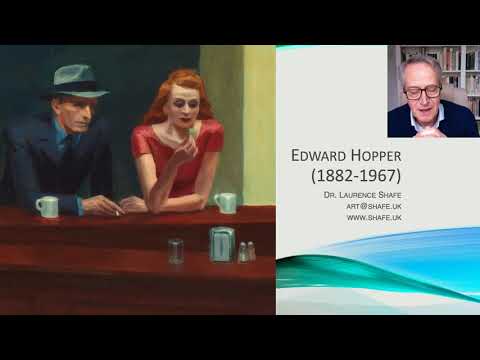
An entertaining conversation about Edward Hopper created by Google Notebook from my notes:
Nearly everyone recognizes Nighthawks—the stark, fluorescent-lit diner where three customers sit in a silence so heavy it practically hums. It is a cornerstone of American culture, a visual shorthand for urban isolation. Yet, the man behind the brush, Edward Hopper, remains a figure of profound contradictions: a conservatively raised New Yorker who adored the bohemian beauty of Paris, and a methodical genius who spent years paralyzed by what he called “unconquerable inertia.”
How did an artist who once spent over a decade in a state of professional stasis become the most recognizable American painter of the 20th century? The answer lies in the “Hopper effect”—that rare ability to shock us into recognizing the inherent strangeness of our most familiar surroundings. By capturing frozen, unredeemable moments, Hopper forces us to look past the veneer of the ordinary and confront the quiet, often unsettling reality of the “inner life.”
1. The “Overnight Success” That Took 40 Years
Edward Hopper did not burst onto the scene; he endured a grueling, forty-year ascent. For fifteen years, he survived as a commercial illustrator for trade magazines—a job he detested, yet a financial necessity that paid the bills while his “fine art” gathered dust. His early career was a masterclass in rejection. Between 1911 and 1923, he sold exactly one painting: a watercolor titled Sailing, which fetched $250 at the 1913 Armory Show. For the next ten years, he sold nothing else.
This period was defined by “unconquerable inertia,” a state where Hopper would sit for days before a blank easel in “helpless unhappiness,” unable to break his creative block. This was not mere laziness; it was the intense, agonizing gestation of a vision. His breakthrough finally arrived in 1923 when he was 41. At the urging of a former classmate, he exhibited The Mansard Roof, which sold to the Brooklyn Museum for £100. This sale finally launched the career we celebrate today, proving that those long years of “inertia” were actually a slow ripening of his singular perspective.
2. The Hidden Muse: Jo Nivison as Everyone
Behind the solitary figures in Hopper’s cityscapes was a constant, if complicated, companion: his wife, Josephine “Jo” Nivison. Married in 1924, they were a study in opposites. Jo was short, gregarious, and liberal; Edward was a 6’5″ secretive conservative. Despite a marriage often described as a battle of wills, Jo was the bedrock of his career. She managed his interviews, recorded his technical process in journals, and—most surprisingly—served as his primary model.
In an act of domestic theater, the “different” women across Hopper’s oeuvre are almost always Jo. She was the lonely usherette in New York Movie, both women sitting at the table in Chop Suey, and the red-headed woman in Nighthawks. In that famous diner scene, the male figures were modeled by Hopper himself using a mirror. This shared reclusiveness created a claustrophobic but productive intimacy.
“Jo would later write that Edward’s lighthouses were essentially self-portraits—metaphors for his own ‘impenetrable ego.’ Their life was one of reclusive frugality; they ate in inexpensive diners and shopped at Sears, only buying new clothes when their old ones became threadbare.”
3. The Realist Who Claimed to be an Impressionist
History labels Hopper an “American Realist,” grouping him with the Ashcan School’s gritty depictions of New York. Hopper, however, scoffed at the label, quipping that he painted with “not a single incidental ashcan in sight.” He preferred the term Impressionist, though his work was less about light on water and more about the “retained memory” of an emotional state.
Hopper’s realism was never intended to be photographic. He practiced a method of drawing not what he saw, but what his imagination recreated. He stripped away the clutter to find the “necessary” psychological truth. As the artist Edgar Degas—a major influence on Hopper—once observed:
“It is very well to copy what one sees. It’s much better to draw what one has retained in one’s memory. It is a transformation in which imagination collaborates with memory.”
Hopper believed that “great art is the outward expression of an inner life,” and his paintings are the architectural blueprints of that internal world.
4. From Canvas to Cinema: The Psycho Connection
Hopper’s ability to instill “architectural anxiety” in inanimate objects has made him a titan of cinematic influence. His 1929 painting House by the Railroad—the first work ever acquired by the Museum of Modern Art—depicts a Victorian house in Haverstraw, New York, with a “desolating” starkness. Its isolated, haunted quality and eerie manipulation of shadow caught the eye of Alfred Hitchcock.
Hitchcock used the painting as the direct visual blueprint for the Bates Motel house in his 1960 horror classic, Psycho. The painting communicates a sense of foreboding without a single drop of blood; its voyeuristic perspective and stark lines suggest that a house, much like a person, can hide secrets behind a blank facade. This “poignant and desolating” realism proved that Hopper’s art could translate perfectly into the language of suspense.
5. The “Self-Portrait” in the Lighthouse
While the city is Hopper’s famous stage, his coastal works, such as The Lighthouse at Two Lights, offer the deepest insight into his psyche. As Jo noted, these were metaphors for his personality. We can distill this lighthouse-as-man philosophy into two core traits:
- Radical Independence: Much like a lighthouse, Hopper’s ego was self-reliant and resistant to outside influence. He famously declared, “The only real influence I’ve ever had is myself,” refusing to join any artistic movement or group.
- Guidance without Interaction: The lighthouse serves as a beacon that guides others through the darkness while remaining physically isolated from the journey itself. This mirrored Hopper’s “impenetrable ego”—he could guide a viewer through a complex emotional landscape while remaining personally detached and resistant to change.
6. The Philosophy in His Wallet
Hopper was a sophisticated, well-read man who carried his artistic manifesto in his pocket. Tucked into his wallet throughout his life was a quote by the writer Goethe, which he believed defined the “beginning and end” of his creative endeavor. It explains why his work feels so personal, even when it depicts a public street corner.
“The beginning and end of all literary activity is the reproduction of the world that surrounds me by means of the world that is in me, all things being grasped, related, recreated, molded and reconstructed in a personal form and an original manner.”
For Hopper, the New York streets were merely the raw material; the finished painting was a reconstruction of the “world that is in me.”
Conclusion: The Unredeemable Moment
Edward Hopper’s work is often linked to the poetry of T.S. Eliot, specifically the haunting line from Four Quartets: “All time is unredeemable.” By capturing “frozen moments” recovered from his imagination, Hopper forces us to pause and witness our own “onward rush towards decay and death.” His paintings don’t tell stories; they capture the weight of existence in the seconds where nothing is happening.
The next time you find yourself alone in a coffee shop or a quiet street, look again through Hopper’s eyes. Are you truly lonely, or are you finally seeing the world as it really is?Gemini Notebook can be inaccurate; please double-check its responses.
51-02 American Realists – Georgia O’Keeffe

Georgia O’Keeffe is celebrated as a foundational figure in American Modernism, renowned for her transition from traditional techniques to a highly personal abstract language. After studying in Chicago and New York, she briefly abandoned art before discovering the philosophical teachings of Arthur Wesley Dow, which encouraged her to express feelings through form rather than mere imitation. Her early career was marked by experimental charcoal drawings and vibrant watercolours inspired by the harsh landscapes of Texas. These innovative works caught the attention of photographer Alfred Stieglitz, who exhibited her art at his famous 291 gallery and eventually became her husband. Despite facing personal struggles, including a nervous breakdown and failing eyesight, she maintained a fierce independence, rejecting the label of “woman artist” to be judged solely on her creative merits. Today, her legacy is preserved through a massive collection of works in New Mexico, where she spent her later years exploring the desert and refining her radical vision of the natural world.
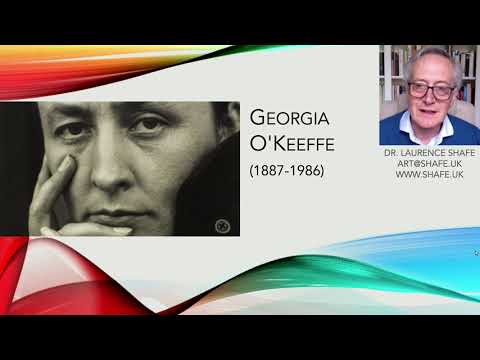
An interesting conversation about Georgia O’Keefe created by Google Notebook from my notes:
Mention the name Georgia O’Keeffe, and most minds immediately conjure a single, vivid image: a magnified flower, its petals unfurling in brilliant, saturated hues. She is a household name, a fixture of museum gift shops and art history surveys alike. Yet, there is a relatable problem in how we celebrate her legacy. By reducing a titan of the 20th century to a handful of floral canvases, we pigeonhole her into a delicate, decorative box that she spent a century trying to dismantle.
The reality of O’Keeffe’s life was significantly grittier and more radical than the serene image of a desert recluse suggests. Her journey was forged in the fire of the Spanish Flu pandemic, the trauma of World War I, and the crushing weight of family bankruptcy. To truly understand the woman behind the canvas is to look beyond the petals and into a life defined by a “wild beauty” and a fierce refusal to be repressed.
1. She Flatly Rejected the Label “Woman Artist”
While today she is celebrated as a feminist icon, O’Keeffe had a profound distaste for the gendered categorization of her work. Though she is frequently called the “Mother of American Modernism,” it was a title she would have loathed. She did not want to be a great “woman artist”; she simply wanted to be an artist.
This was not merely a semantic preference but a radical defense of her creative autonomy. She fought against a “stifling repression” found in the traditional art world, seeking instead a personal language that did not rely on imitating nature. Her commitment was to a vision independent of the marketplace or social expectations.
“I have but one desire as a painter – that is to paint what I see, as I see it, in my own way, without regard for the desires or taste of the professional dealer or the professional collector.”
2. Her Studio was a Ford Model A
The delicate aesthetic of O’Keeffe’s work often masks the rugged, “frontierswoman” nature of her process. After moving to the harsh landscapes of Abiquiú and Amarillo, she adopted unconventional methods to capture what she called “the beauty of that wild world.” She used her Ford Model A as a mobile studio, painting from the backseat to shield herself from the relentless desert sun and swarming insects.
O’Keeffe’s resilience was a form of survival. She was known to paint under tarpaulins during rainstorms and wear heavy gloves to handle her brushes when the desert winter turned bitter. This gritty, mobile lifestyle reveals an artist who refused to be contained by a traditional studio, finding her “sincerest” inspiration in the open, unyielding elements of the New Mexico badlands.
3. She Abandoned Painting Multiple Times
O’Keeffe’s path was never a straight line; it was a series of dramatic protests and pivots. She walked away from her craft three distinct times. The first occurred at age 21, when she became so discouraged by the constraints of traditional art education that she abandoned the idea of being an artist entirely. It was only after family bankruptcy and a bout of measles that she returned, discovering the revolutionary ideas of Arthur Wesley Dow. This return sparked her first authentic, truly original works—a series of abstract charcoal drawings she called “The Specials.”
Later, in the 1930s, she stopped painting during a nervous breakdown. Her final departure came when her eyesight failed, yet her creative spirit remained unyielding. She pivoted to sculpture, a medium she could navigate through touch, proving that her vision was never dependent on her eyes alone. Her career was a testament to a specific kind of courage:
“I’ve been absolutely terrified every moment of my life — and I’ve never let it keep me from doing a thing I wanted to do.”
4. The 25,000-Page Love Story
The central relationship of O’Keeffe’s life was with Alfred Stieglitz. Their partnership was the volatile engine of American Modernism, but it was fraught with tension. Stieglitz was her greatest champion, yet he also sought to categorize her in ways she despised. He famously pushed her to move from watercolors to oils specifically to avoid the “amateur woman artist” stereotype.
Stieglitz put her on a “pedestal,” but for O’Keeffe, that pedestal offered “little room to move.” While he thrived in the frenetic social life of New York, she required peace and calm to create. Their connection survived through an extraordinary 25,000 pages of love letters, written sometimes three times a day. He made her the most photographed woman of her time, yet she spent much of her life fleeing his “pedestal” for the solitude of the desert.
5. Those Famous Flowers Weren’t About What You Think
It is the most persistent myth in art history: the interpretation of O’Keeffe’s flowers as coded depictions of female genitalia. O’Keeffe was emphatic and frustrated in her denial of these theories, arguing that critics were simply “hanging their own associations” on her work. Remarkably, these floral paintings only account for about 200 of her 2,000+ works.
Her true intent was a radical shift in perspective, influenced by the idea that music could be translated for the eye. In works like Blue and Green Music, forms flow upward “like flames from a cold fire.” She wanted to force the world—specifically “busy New Yorkers”—to stop and truly see.
“Nobody sees a flower – really – it is so small – we haven’t time – and to see takes time… So I said to myself – I’ll paint what I see – what the flower is to me, but I’ll paint it big and they will be surprised into taking time to look at it… Well – I made you take time to look … and when you took time … you hung all your own associations with flowers on my flower and you write about my flower as if I think and see what you think and see of the flower – and I don’t.”
6. A Scandalous Chapter—From Frida to Juan
O’Keeffe’s commitment to doing exactly what she wanted extended to her private life, which was far more scandalous than her public image suggested. In 1932, amidst the complexities of her marriage, she reportedly had an affair with the legendary Frida Kahlo. The two met in New York and shared a bond that defied the rigid social mores of the era.
This streak of independence remained unbroken into her old age. At 85, O’Keeffe entered into an intimate relationship with Juan Hamilton, a 27-year-old artist who had come to her home looking for work. Despite a 58-year age gap and fierce “negative attention” from her social and business circles, she remained devoted to the partnership until her death. To O’Keeffe, the opinions of others were secondary to her own “purest” desires.
7. The $44 Million “Weed”
Growing up on a simple dairy farm in Wisconsin, O’Keeffe was a “sincere” artist who claimed she only wanted to paint without regard for collectors. Yet, the market eventually caught up to her genius in a staggering way. In 2014, her painting Jimson Weed, White Flower No. 1 (1932) sold at auction for $44.4 million.
This sale set the record for the most expensive work by a female artist ever sold—a price more than three times the previous record. It was a staggering validation of her market power, yet a poignant irony for a woman who spent her life ignoring the “desires of the professional dealer.” She lived to be 98, nearly reaching her goal of 100, leaving behind a legacy that the market could value, but never fully contain.
The Legacy of a Fearless Eye
Georgia O’Keeffe’s impact on Modernism was a sustained act of resistance. Her work The Flag (1918), painted while she was recovering from the Spanish Flu and grieving her brother Alexis who died in WWI, shows a blood-smeared, withered flag—a testament to her “trauma and discontent” against brutality. She was never just a painter of flowers; she was a chronicler of the soul’s reaction to the “wild world.”
As we navigate our own fast-paced lives, O’Keeffe’s philosophy offers a quiet challenge. She forced the world to look at the small things by painting them large. If we took the time to adopt her “fearless eye,” what radical beauty might we discover in our own modern lives? In her world, to “really see” was the most courageous act of all.