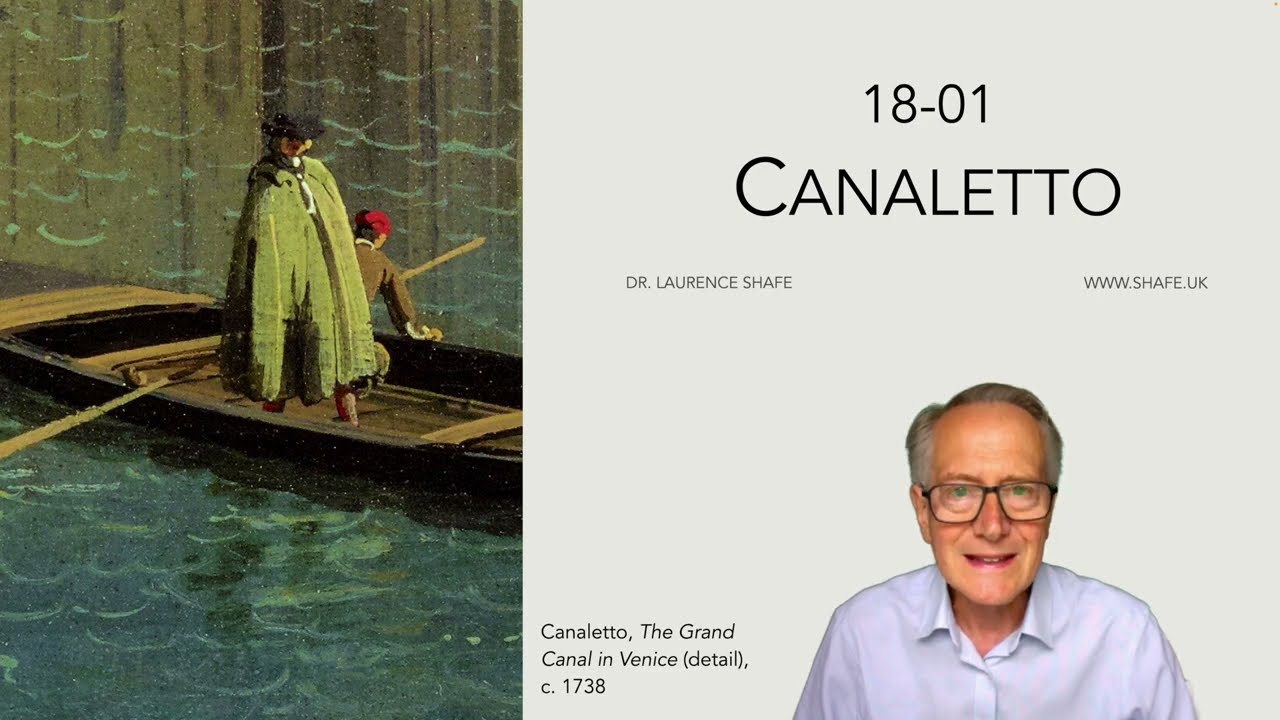
18-01 Canaletto
Rococo art emerged in early eighteenth-century France as an elegant, playful reaction against the grandeur of Baroque, embracing lightness, ornamentation, and intimate sensuality in decorative arts, painting, and architecture. The style favoured soft pastel colours, curved asymmetric forms, and scenes of aristocratic leisure and romantic fantasy, with Antoine Watteau inventing the fête galante and Jean-Honoré Fragonard celebrating love and nature with dazzling virtuosity. Outside France, Rococo flourished in elaborate German and Austrian church interiors and palaces, and in Venice in the luminous vedute of Canaletto and the theatrical paintings of Giambattista Tiepolo. As the Enlightenment promoted reason and civic virtue, the style fell from favour, giving way to the moral seriousness of Neoclassicism by the 1770s. This chapter explores the major figures, patrons, and works of the Rococo through a series of illustrated talks covering painting, sculpture, and decorative arts across Europe.
A podcast created by Google NotebookLM based on my notes
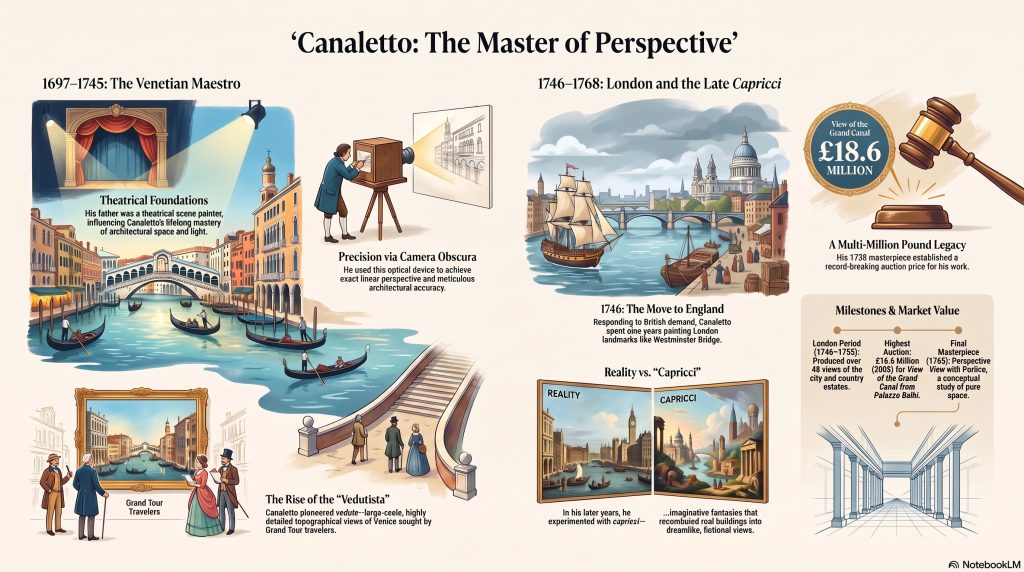
This briefing document summarizes the main themes, key ideas, and important facts about the renowned Venetian painter Giovanni Antonio Canal, known as Canaletto (1697–1768), based on the provided sources. It highlights his artistic evolution, his significant contributions to the vedute genre, his period in England, and his lasting legacy.
Canaletto is included in Section 18 on Rococo art due to overlapping dates, even though his style prioritized topographical accuracy and architectural detail rather than the exuberant ornamentation and fantasy of Rococo painting.
18-02 French Rococo – Watteau, Boucher & Fragonard
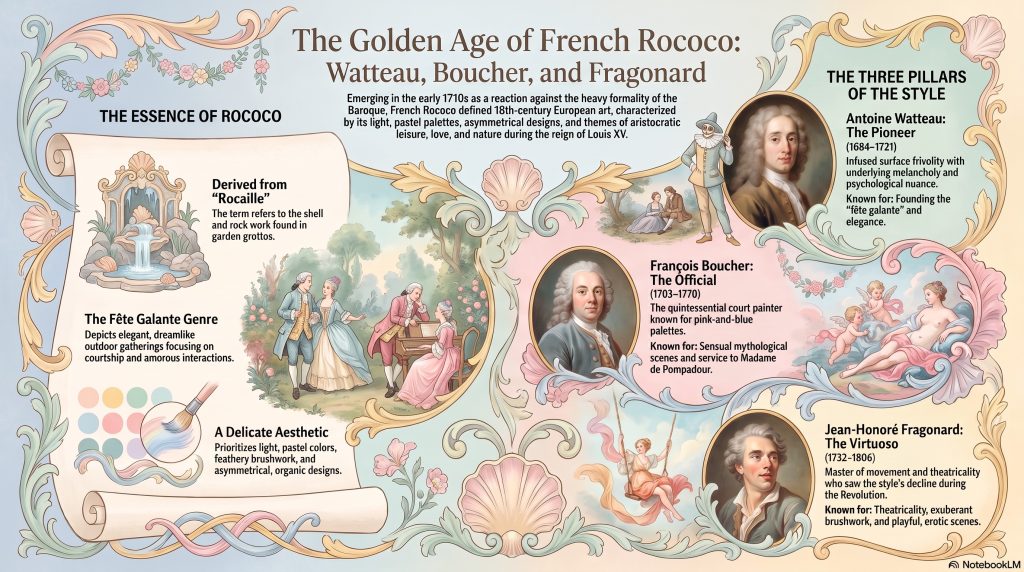
This overview examines the French Rococo art movement through the lens of its three most influential figures: Watteau, Boucher, and Fragonard. Emerging in the early 18th century as a reaction to the rigid Baroque style, this era is defined by playful themes, pastel palettes, and scenes of aristocratic leisure. Antoine Watteau pioneered the movement by introducing the “fête galante,” a genre capturing elegant outdoor gatherings infused with a unique sense of melancholy. François Boucher later elevated the style with his sensual mythological allegories and decorative virtuosity, becoming the favorite painter of the French court. Jean-Honoré Fragonard represents the movement’s exuberant peak and eventual decline, shifting from scandalous romantic icons like The Swing to more intimate, domestic subjects. Collectively, these sources illustrate how Rococo art mirrored the frivolity and escapism of the French elite before the onset of the Revolution and Neoclassicism.
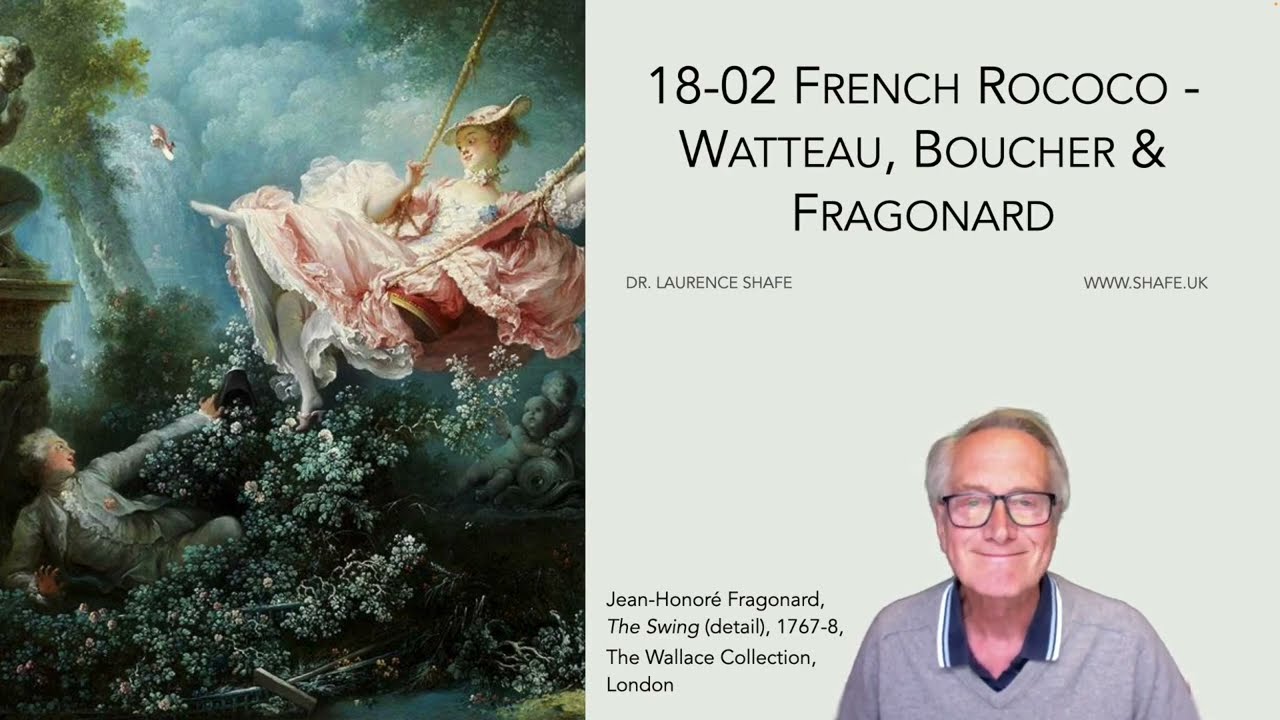
A podcast created by Google NotebookLM from my notes
A review of French Rococo art through the works of its three main artists: Antoine Watteau, François Boucher, and Jean Honoré Fragonard.
Key Themes and Ideas:
In summary, this briefing document highlights how French Rococo art, particularly through the works of Watteau, Boucher, and Fragonard, reflected the shifting social and cultural landscape of Louis XV’s reign. While initially defined by elegance, sensuality, and escapist fantasies of the aristocracy and characterized by a light, playful, and often erotic style, it faced increasing criticism for its perceived superficiality and decadence, particularly as France moved towards the Revolution. Watteau introduced a new genre with a melancholic undertone, Boucher became the quintessential painter of sensual opulence and mythological fantasy, and Fragonard explored themes of love, secrecy, and pleasure with technical virtuosity, with his later works reflecting the changing emotional tone of the era. The works discussed serve as key examples of the style and its evolution.